Accent lighting is the focused, intentional technique landscape designers use to draw attention to specific outdoor elements while enhancing curb appeal, safety, and nighttime usability. Unlike general pathway lights or functional porch lamps, accent fixtures highlight architectural details, mature trees, garden sculptures, and water features with deliberate contrast and precision. In this guide, you'll learn what accent lighting is, how it differs from ambient and task lighting, which fixture types work best for different applications, and how professional design brings balance, subtlety, and elegance to residential landscapes throughout the DC metro area.
Key Takeaways
- Accent lighting creates focal points with beams 3–5× brighter than ambient light
- Fixtures include spotlights, well lights, and bullet lights for specific landscape features
- Warm white LEDs (2700K–3000K) suit traditional architecture and natural materials
- Hidden daytime placement showcases trees, walls, and columns after dark
- Professional design lights 3–5 key features—not the whole property
What is Accent Lighting?
Accent lighting is focused illumination that highlights specific landscape features, architectural details, or decorative elements in your outdoor space. Kichler defines outdoor accent lights as fixtures that shine upward to illuminate trees, large shrubs, boulders, or stone walls—creating contrast with directed beams.
The technique works by establishing focal points in your landscape. According to general lighting-design principles, accent light must be at least 3 times brighter than ambient light to draw the eye. More dramatic effects use higher ratios:
- 5:1 creates a distinct focal area
- 10:1 delivers a strong focal accent
- 15:1 produces dramatic, theatrical emphasis
These benchmarks share one rule: contrast creates the accent. If the feature is not bright enough against its surroundings, it disappears into the background.

The Role of Accent Lighting in Landscape Design
Accent lighting complements ambient (general) and task (functional) light—it does not replace them. Used well, it adds depth and drama to a complete outdoor lighting plan.
It also steers attention. Light a mature tree canopy, a textured stone chimney, or a paired set of columns, and guests know where to look first. That directed contrast builds depth flat wash lighting cannot match.
Common Residential Applications
At Landscape Lighting Designers Plus, Craig Collins has applied these techniques for 21+ years across Bethesda, Potomac, Chevy Chase, and Washington DC. Typical residential accents include:
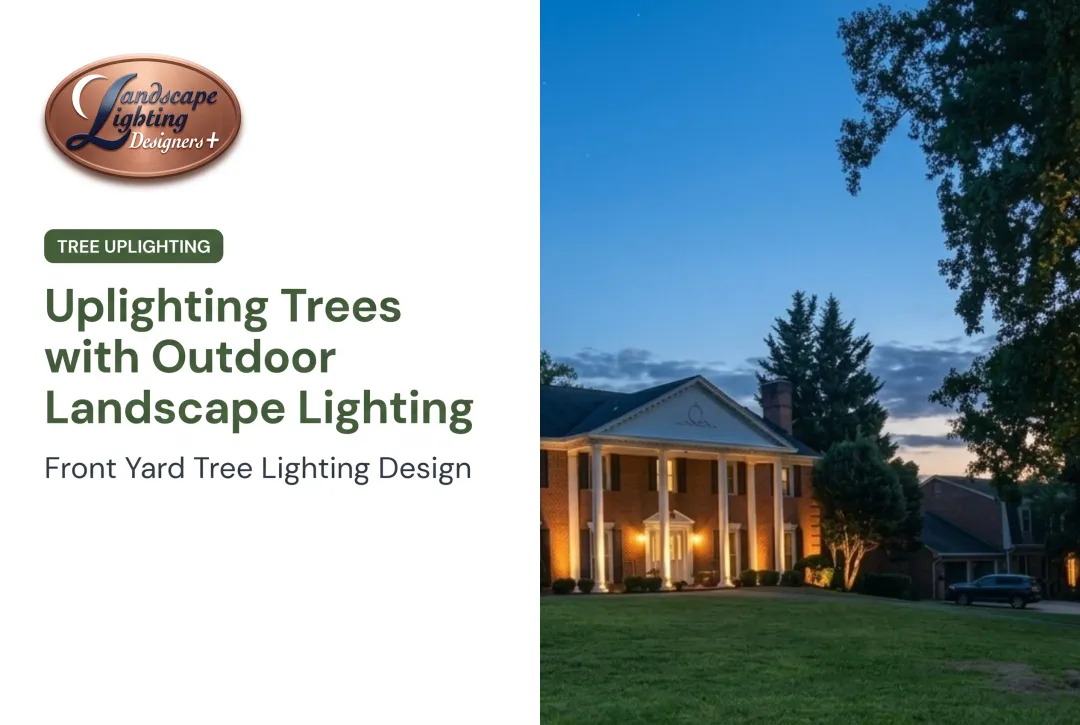
- Soft uplighting on mature tree trunks and canopies
- Low-angle grazing across brick, stone, and masonry walls
- Focused spotlights on sculptures, fountains, and water features
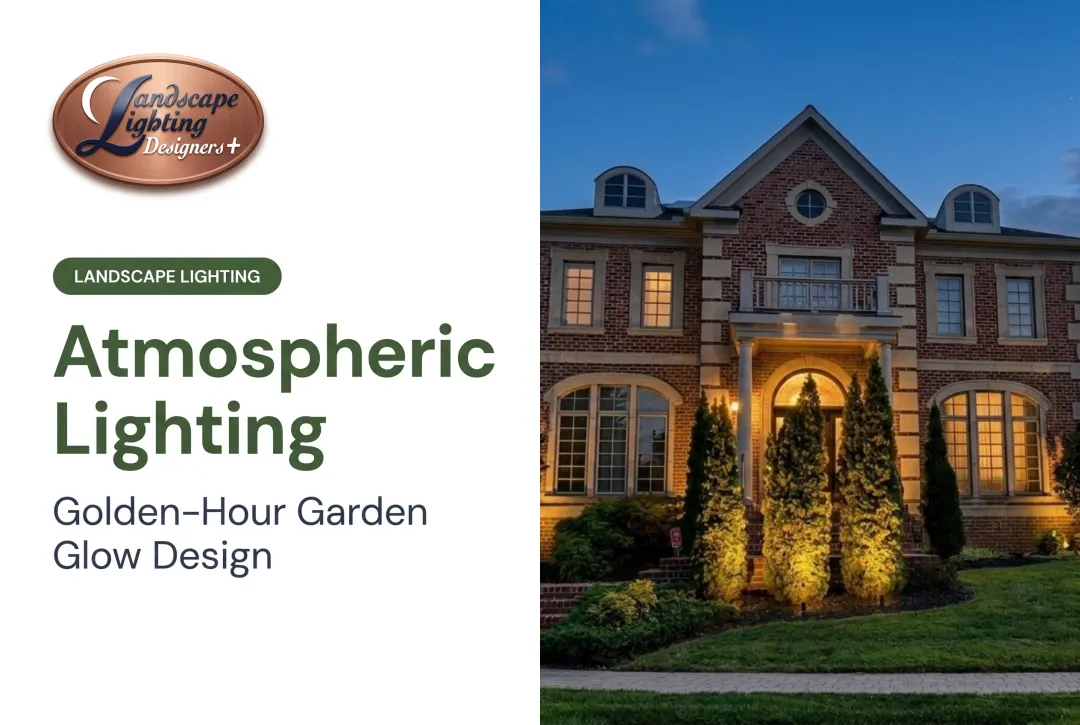
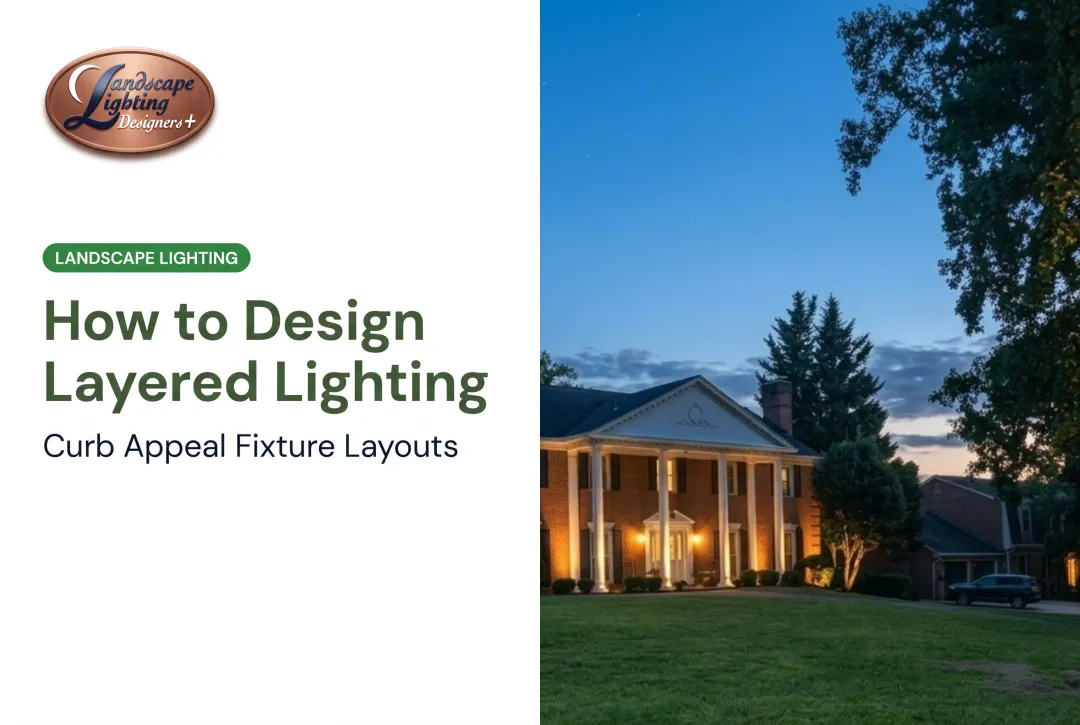
- Entry, porch, and column accents on Colonial, Tudor, and Federal homes
- Subtle fixtures for specimen plantings, beds, and ornamental shrubs
On historic Georgetown row houses and Capitol Hill Victorians, warm white LEDs in the 2700K–3000K range and low-angle aim reveal texture without washing out the façade.
How Accent Lighting Differs from Ambient and Task Lighting
Professional landscape lighting relies on layered design: three distinct types working together so outdoor spaces feel balanced, usable, and intentional after dark.
| Lighting Type | Purpose | Brightness Relationship | Residential Examples |
|---|---|---|---|
| Ambient | General visibility and safety | Base illumination level | Pathway lights, post lights, moonlighting from trees |
| Task | Functional illumination for activities | Brighter than ambient, localized | Deck dining lights, BBQ area lighting, stair lights |
| Accent | Aesthetic focal points and drama | 3-10x brighter than ambient | Uplighting trees, grazing walls, spotlighting sculptures |
Ambient lighting provides overall visibility across your property. It's the soft glow that lets guests navigate your front walk or backyard without tripping. FX Luminaire describes path lights as providing safe walkway illumination while also creating ambiance—the foundational layer.
Task lighting serves specific outdoor activities: grilling, dining on the deck, ascending front steps safely, or reading by the pool. It's brighter and more focused than ambient light, but still functional rather than decorative.
Accent lighting contrasts sharply with the other layers. It is typically 3 to 10 times brighter than ambient light, aimed at aesthetics rather than function, and deliberately builds dramatic shadows and highlights.
According to contrast-ratio guidance from the Lighting Design Lab, the brightness ratio between accent and ambient determines how strongly a feature stands out. Higher ratios produce more dramatic focal points.
How All Three Layers Work Together
Imagine a Potomac backyard with a pond, mature oak tree, and stone patio:
- Ambient: Low path lights guide visitors around the pond and across the lawn
- Task: Deck lights illuminate the dining table and BBQ prep area
- Accent: Uplights at the oak's base project dramatic shadows through the canopy; a submersible fixture makes the fountain sparkle; grazing lights emphasize the stone wall's texture
Together, these layers create a space that's safe, functional, and visually compelling. Remove the accent layer, and the yard becomes flat and utilitarian. Remove ambient or task lighting, and the space becomes unsafe or unusable.

Craig Collins designs every project with this balance in mind, emphasizing subtlety and restraint to avoid overlighting. Customer Kevin B. praised his work as "technically impressive yet subtle," while Sarah S. noted her initial concern about excessive light was unfounded. The finished design struck the right balance.
Benefits of Outdoor Accent Lighting for Your Home
Increased Curb Appeal and Perceived Property Value
The 2023 NAR/NALP Remodeling Impact Report gave landscape lighting a Joy Score of 10 and estimated Realtor cost recovery in the 56-59% range. That score reflects homeowner satisfaction and partial resale recovery—not a guaranteed appraisal bump—but it still ranks professionally designed lighting among the most satisfying outdoor investments.
Homeowners describe the nighttime change in plain terms:
- Xenia B.: Craig's installation "truly transformed the look of our house at night"
- Joseph R.: "very pleased with the appearance of the home at night"
- Dimitri M.: after 16 years, the house was "no longer shrouded in darkness"
Enhanced Safety and Security
Accent lighting eliminates dark corners and improves visibility around entries, steps, and driveways. Thoughtful illumination makes walkways and entries easier to navigate after dark and gives the home a lived-in look that discourages casual intruders.
Practical gains include:
- Clearer sight lines at doors, steps, and driveways
- Fewer trip hazards along paths and grade changes
- A warm, occupied appearance without harsh glare
- Aimed beams that light the ground and architecture—not your neighbors' windows
Craig's designs use low-glare fixtures and careful placement so movement stays safe without runway-style path lighting or blinding spotlights.
Extended Outdoor Living and Evening Entertainment
Lit patios, decks, fire pits, and pool areas stay usable well after sunset. Accent lighting turns those zones into comfortable places for dining, conversation, and quiet evenings outdoors. Betty R. said Craig's backyard lighting "really makes a difference at night," lifting both the landscaping and how much she uses the space.
Highlight garden beds, water features, and architectural details, and the yard becomes a place you choose to linger—not just pass through on the way inside.
Seeing the technique on a finished property makes the decision easier—our project gallery collects completed installations from homes around the DC metro area.
Types of Landscape Accent Lighting Fixtures
Choosing the right fixture depends on the feature you're highlighting, the effect you want, and the environment where it will be installed.
Spotlights and Floodlights
Spotlights create narrow, intense beams (10-45 degrees) ideal for highlighting small features like statues, specimen plants, or architectural columns. Kichler recommends:
- 10-15 degree beams for tree trunks or columns
- 35 degree beams for small deciduous trees (or two for cross-lighting a medium tree)
- 60 degree beams for wide canopies (two on opposing sides for cross-lighting)
Floodlights use wider beams (45-120 degrees) to wash larger areas like building facades or broad garden beds. Both fixture types are available in energy-efficient 12V LED systems, which are safe and well suited to residential landscapes.
Craig Collins uses bullet spotlights with MR16 GU5.3 LED bulbs rated at 12V and 2700K warm white for tree uplighting and focused facade washing throughout the DC metro area.

Well Lights and In-Ground Uplights
Well lights are recessed fixtures installed flush with the ground, protected by metal housings, designed to withstand foot traffic and lawn equipment. WAC Lighting offers models rated IP67 with outputs up to 2,000 lumens for larger features.
Placement techniques:
- Position at the base of trees to create dramatic canopy shadows projected onto walls or overhead
- Aim at stone or brick walls at narrow angles (15-20 degrees) to graze texture and create visual depth
- Use near columns or entry features to emphasize vertical architectural lines
Well lights remain nearly invisible during the day, revealing their impact only after dark.
Bullet Lights and Directional Stake Lights
These versatile above-ground fixtures mount on stakes or bases, making them easy to reposition as landscapes mature and design needs change. Bullet lights typically accept MR16 or GU10 LED bulbs and offer adjustable heads for precise aiming.
Key advantages:
- Adjust angles or relocate fixtures as plantings grow or the garden design evolves
- Test multiple placements before locking in final positions
- Change bulbs or make repairs without excavation
Customer Brent L. noted that Craig repositioned lights after installation to achieve the best presentation. That kind of refinement is much easier with above-ground fixtures.
Path Lights with Directional Heads
Some path lights feature adjustable heads that serve dual purposes: illuminating walkways for safe navigation while also spotlighting nearby plantings or garden features. These hybrid fixtures reduce total fixture count and wiring complexity while maintaining both ambient and accent layers.
Underwater and Water Feature Lights
Submersible fixtures designed for ponds, fountains, and water features create strong reflections and emphasize movement. WAC offers a 9-15 VAC underwater model rated IP68, wet-location listed, and approved for continuous immersion up to 5 meters. It carries UL, cUL, and UL 1838 certifications.
Safety requirements:
- Must be rated for wet locations
- Low-voltage systems (12V or 9-15 VAC) preferred for water applications
- Verify fixture carries appropriate UL listings for submersible use
Craig Collins frequently highlights ponds and fountains in Potomac and Bethesda projects, using submersible fixtures to create sparkling focal points that complement surrounding garden plants and stonework.
Wall-Mounted Accent Fixtures
Wall sconces and directional wall lights mounted on exterior walls can downlight architectural details, graze textured surfaces, or highlight entry features. These fixtures work well on Georgetown row houses and narrow urban lots where ground space is limited.
How to Use Accent Lighting Effectively in Your Landscape
The "Less is More" Principle
Over-lighting creates visual clutter and diminishes impact. Rather than illuminating everything, select 3-5 key features worth highlighting—mature trees, architectural columns, a fountain, textured stonework, or a garden sculpture.
Kichler warns that an overlit tree can distract from an otherwise balanced design. Craig Collins builds every project around balance, subtlety, and elegance, so the property's strongest features stand out without flooding the rest of the landscape.
Homeowners notice that restraint. Kevin B. described the results as "impressive as it is subtle," while Sarah S. praised the balance after worrying the design would use too much light.
Color Temperature Selection
Warm white (2700K-3000K) creates an inviting atmosphere for residential landscapes and complements traditional brick, stone, and masonry architecture. Kichler recommends warm white for brown or cedar surroundings, natural-colored walls or stonework, and foliage with red, orange, or yellow tones.
Craig uses 2700K LEDs in most DC-area projects, particularly for historic Chevy Chase, Georgetown, and Capitol Hill homes where warm tones reveal architectural texture without harsh, contemporary glare.
Cool white (4000K+) can provide modern, dramatic effects but may feel sterile on traditional homes. Reserve it for contemporary architecture or specific artistic intent.
Fixture Placement and Aiming Techniques
Beam spread determines coverage and intensity. Kichler provides guidance tied to target geometry:
- Narrow beams (10-15 degrees): Tree trunks, columns, narrow architectural features
- Medium beams (35 degrees): Small trees, medium shrubs, garden sculptures
- Wide beams (60 degrees): Large tree canopies, broad façades, extensive plantings
Placement strategies:
- Uplight at the base of trees: Position fixtures 6-18 inches from the trunk, aiming upward to project canopy shadows onto walls or overhead
- Graze walls at narrow angles: Place fixtures close to the wall surface (6-12 inches away) and aim along the plane to emphasize texture and depth
- Cross-light sculptures: Use two or more fixtures from different angles to create dimensional shadows and highlights
Craig personalizes placement for each property and often returns after installation to reposition lights. That post-install aiming pass is what turns a good layout into a finished design.

Common Accent Lighting Mistakes to Avoid
Overlighting and Visual Clutter
Too many accent lights or overly bright fixtures create a harsh, commercial appearance and wash out desired focal points. The National Association of Landscape Professionals identifies excessive light as a primary failure mode, causing glare, facade hot spots, and flat designs that lack visual hierarchy.
How to avoid it:
- Highlight only your property's 3-5 most important features
- Use contrast ratios (3:1 to 10:1) instead of maximum brightness
- Test lighting at night before finalizing placements
- Remember that shadows and darkness create drama. Don't eliminate them
Improper Fixture Concealment
Accent lights should remain hidden during the day and direct attention to the feature, not the light source itself. Visible fixtures, exposed wiring, and poorly positioned stakes detract from your landscape's appearance.
Best practices:
- Use in-ground well lights for flush, invisible installations
- Position bullet lights behind plantings or hardscape elements
- Route wiring underground and away from sight lines
- Choose fixtures in finishes that blend with surroundings (bronze, black, natural metal)
Craig's designs for historic DC properties emphasize low-profile fixtures and concealed wiring to preserve architectural character and comply with Historic Preservation Office guidelines.
Using Bargain Fixtures and Transformers
Cheap fixtures fail quickly in outdoor environments, requiring expensive replacement and creating safety hazards. The NALP notes that certain alloy, powder-coated, and integrated-bulb fixtures often need full replacement in professional installations.
Why professional-grade fixtures matter:
- IP67-rated housings withstand rain, snow, and temperature extremes
- Marine-grade brass, copper, and stainless steel resist corrosion
- Reputable manufacturers offer 10-15 year warranties
- UL, cUL, and UL 1838 listings support code-compliant, safer installs
Craig Collins works exclusively with low-voltage (12V) landscape fixtures rather than 120V house-mounted lights, keeping installations safe, efficient, and in harmony with the landscape.
One long-term client, Juan P., reported maintenance, additions, and updates on Craig's installation for about 8 years—durable equipment paired with ongoing professional service.
And if you would rather judge the effect on your own property before committing, we can show you your home at night.
Frequently Asked Questions
What is accent lighting?
Accent lighting is focused illumination that highlights specific outdoor features—trees, architecture, or garden focal points. Beams are typically 3–10 times brighter than surrounding ambient light so those features read as clear focal points.
What is the difference between ambient and accent lighting?
Ambient lighting provides general illumination for visibility and safety (pathway lights, post lights, moonlighting from trees). Accent lighting is typically about 3 times brighter and aimed at specific features to build focal points and visual hierarchy. Ambient sets the baseline; accent creates the drama.
How to use accent lighting?
Pick 3–5 features worth highlighting—mature trees, columns, sculptures, water features, or textured walls—and match fixtures to each job (spotlights for narrow targets, well lights for uplighting, bullet lights for aim flexibility). Uplight trunks, graze walls at a narrow angle, or cross-light sculptures, then layer with ambient light using warm white LEDs (2700K–3000K).
What color temperature is best for outdoor accent lighting?
Warm white (2700K–3000K) suits most residential landscapes. It flatters brick, stone, and wood and reads as inviting rather than clinical. Cool white (4000K+) can work on modern homes or for a sharper effect, but often feels harsh on traditional properties.
Can accent lighting improve home security?
Yes. Strategic accent lighting reduces dark corners and signals a well-maintained, occupied home. Better visibility at entries, driveways, and windows makes the property safer and less appealing to opportunistic intruders, even though residential crime-reduction studies are limited.
How long do low-voltage LED accent lights last?
Quality 12V LED landscape fixtures typically last 25,000–50,000 hours (about 10–20 years of nightly use). Marine-grade brass or copper housings, a proper transformer, and weatherproof connections extend that life. Craig Collins’ long-term clients often see strong performance for 8+ years with routine maintenance.
Bringing It All Together: Professional Design Makes the Difference
Accent lighting transforms residential landscapes from invisible after dark to architectural showcase, but only when designed with intention and technical care. Thoughtful fixture selection, precise placement, appropriate contrast ratios, and a designer's eye for balance separate a property that is simply lit from one that feels curated.
Craig Collins has spent over 21 years refining this craft throughout Bethesda, Potomac, Chevy Chase, and Washington, DC. His owner-operated approach means every project gets personal attention: no project managers, no sales reps—just a designer who treats low-voltage landscape lighting as an art form. From historic Georgetown row houses to expansive Potomac estates, his work stays subtle and elegant, always in step with the surrounding architecture and landscape.
If you're ready to see your home's best features highlighted with museum-quality design and professional installation, contact Landscape Lighting Designers Plus at (888) 582-8845 or contact@landscapelightingnow.com for a complimentary, no-obligation consultation.