According to verified manufacturer data, modern LED landscape fixtures use 79% less energy than traditional halogen systems while producing equivalent light output. With DC-area electricity rates ranging from 17.61 to 25.40 cents per kilowatt-hour, a typical 10-15 fixture installation costs just $0.90 to $2.92 per month to operate—a fraction of what older systems demand.
This guide explores how low-voltage LED landscape lighting creates beautiful outdoor environments while slashing energy consumption, extending fixture lifespans to decades, and enhancing your property's safety, security, and market value throughout Bethesda, Potomac, Chevy Chase, and surrounding communities.
Key Takeaways
- Low-voltage LED systems cut energy use by up to 79% compared to halogen fixtures
- Layered professional design boosts safety and beauty without over-lighting the property
- Quality LED fixtures last 50,000-72,000 hours, or about 22-49 years with typical evening use
- Strategic placement transforms outdoor spaces without ongoing high costs or frequent maintenance
What is Low-Voltage Landscape Lighting?
Low-voltage landscape lighting operates at 12 volts instead of standard 120-volt household current. A transformer steps down your home's electrical power to this safer, more efficient level for outdoor use. That difference is why professional landscape installations use low-voltage systems exclusively, never 120V house-mounted fixtures.
Safety Advantages
The 12-volt system provides multiple safety benefits:
- Reduced shock risk for homeowners, children, and pets throughout the property
- Safe operation around water features, pools, fountains, and irrigation systems
- Lower installation risk for technicians working with outdoor electrical systems
- Minimal fire hazard compared to higher-voltage alternatives
These safety characteristics make low-voltage lighting especially valuable for Bethesda and Potomac properties with pools, water features, and extensive gardens where people and pets roam freely.
Seamless Landscape Integration
Low-voltage systems integrate naturally into existing landscapes without extensive electrical work or disruptive installation:
- Fixtures can be positioned precisely around mature trees, garden beds, pathways, and architectural features
- Wiring remains concealed and unobtrusive, preserving your landscape's aesthetic
- Installation doesn't require conduit burial or major trenching typical of 120V systems
- Hardware stays visually subtle, so focus remains on your home and plantings
This discreet integration is particularly important for Georgetown's historic properties and Chevy Chase's traditional homes, where visible electrical equipment would compromise architectural character.
Design Flexibility and Future Expansion
As trees grow, gardens change, and outdoor living areas expand, low-voltage systems adapt with you:
- Fixtures can be repositioned to maintain optimal lighting as plantings mature
- New zones can be added without rewiring entire systems
- Seasonal adjustments preserve the intended lighting effect year-round
- Transformer capacity allows for planned expansion over time
Juan P., a client with an eight-year relationship with Landscape Lighting Designers Plus, experienced this flexibility firsthand, receiving ongoing maintenance, creative updates, and budget-conscious additions as his property's needs changed.
Why Energy Efficiency Matters for Your Outdoor Lighting
Energy Savings and Lower Utility Bills
The efficiency gap between LED and traditional landscape lighting shows up clearly in the numbers. FX Luminaire's professional path light draws just 4.2 watts while delivering the lumen output equivalent of a 20-watt halogen lamp (a verified 79% reduction in energy use at the fixture).
Real-world DC metro operating costs:
Using EIA residential electricity rates (17.61 cents/kWh in Virginia, 21.77 cents/kWh in Maryland, 25.40 cents/kWh in DC), here's what a typical residential system costs:
| System Configuration | Monthly LED Cost | Annual LED Cost | Annual Halogen Cost | Annual Savings |
|---|---|---|---|---|
| 10 fixtures, 4 hours/night (VA) | $0.90 | $10.80 | $51.42 | $40.62 |
| 10 fixtures, 4 hours/night (MD) | $1.11 | $13.35 | $63.57 | $50.22 |
| 10 fixtures, 4 hours/night (DC) | $1.30 | $15.58 | $74.17 | $58.59 |
| 15 fixtures, 6 hours/night (VA) | $2.02 | $24.30 | $115.70 | $91.40 |
| 15 fixtures, 6 hours/night (MD) | $2.50 | $30.04 | $143.03 | $112.99 |
| 15 fixtures, 6 hours/night (DC) | $2.92 | $35.04 | $166.87 | $131.83 |

These calculations show that even larger systems running longer hours still cost less per month than a couple of premium coffees. Older halogen systems use about five times more electricity.
Environmental Impact
Beyond your utility bill, energy-efficient lighting reduces your carbon footprint. Using the EPA's national emissions factor of 0.8231 pounds of CO₂ per kilowatt-hour, switching from halogen to LED landscape lighting prevents:
- 190 pounds of CO₂ annually for the 10-fixture scenario
- 427 pounds of CO₂ annually for the 15-fixture scenario
For DC metro homeowners, that is a meaningful cut in household emissions without changing how the property looks or functions at night.
Longevity and Reduced Maintenance
Professional LED landscape fixtures outlast traditional bulbs by a wide margin. Verified manufacturer ratings show:
| Fixture Type | Rated Life | Years at 6 hrs/night | Years at 4 hrs/night |
|---|---|---|---|
| Quality LED landscape fixtures | 50,000-72,000 hours | 22.8-32.9 years | 34.2-49.3 years |
| Incandescent bulbs | ~1,000 hours | 0.5 years | 0.7 years |
| Halogen bulbs | 2,000-4,000 hours | 0.9-1.8 years | 1.4-2.7 years |

In practice, that longer life means:
- Decades between lamp changes instead of yearly or every-other-year swaps
- Lower maintenance spend from fewer service calls and less labor
- Far fewer spent bulbs headed to the landfill over the life of the home
- Steady light output over time, unlike halogens that dim as they age
For busy DC metro homeowners, this translates to years of beautiful lighting without the hassle and expense of constant bulb replacement.
Property Value Enhancement
Professional landscape lighting enhances property appeal and market value, particularly in high-end neighborhoods. While no appraisal study specific to 12V systems in Bethesda or Potomac was available, the National Association of Realtors' 2023 study of professional LED landscape lighting installations found:
- $6,800 average professional installation cost (20-fixture system)
- $4,000 estimated value recovered
- 59% cost recovery ratio (meaning 59% of installation cost was recovered in property value, not a 59% increase in total value)
- Joy Score of 10, the highest satisfaction rating
In competitive DC metro neighborhoods like Potomac, Bethesda, and Chevy Chase, an energy-efficient system reads as a finished amenity: stronger curb appeal, lower operating costs, and less upkeep for the next owner.
Types of Energy-Efficient Landscape Lighting Fixtures
Low-voltage LED fixtures handle different jobs around the property—paths, trees, hardscape, and gardens—without high energy use. Matching the fixture type to each task keeps the design balanced, subtle, and efficient.
Path and Walkway Lights
Path lights enhance safety along walkways, driveways, and garden paths while consuming minimal energy. Professional fixtures draw just 2-7 watts each while providing consistent illumination.
Optimal placement guidance:
- Position fixtures evenly to create a welcoming rhythm without over-lighting
- Use low-glare designs that illuminate the ground plane rather than shining into eyes
- Eliminate dark spots on brick, flagstone, steps, and grade changes
- Maintain architectural harmony so fixtures complement your landscape rather than dominate it
For long driveways common in Potomac estates or winding garden paths in Bethesda properties, strategic spacing supports clear wayfinding while preserving natural beauty.
Uplighting for Trees and Architectural Features
Uplighting creates dramatic effects by highlighting specimen trees, columns, stonework, and architectural details from below. When executed with restraint, this technique adds depth and vertical interest without harsh glare.
Achieving artistic balance:
- Aim fixtures at low angles to reveal texture in brick, stone, and masonry rather than flooding surfaces
- Use warm-white LEDs (2700K-3000K) that complement traditional architecture and natural materials
- Illuminate tree trunks and lower canopies to emphasize height and organic structure
- Conceal fixture hardware to keep attention on the illuminated features themselves
This approach suits Georgetown's Federal-style homes and Chevy Chase's historic properties, where subtle, preservation-conscious lighting reveals architectural character without overwhelming period details.

Downlighting and Moonlighting Effects
Downlighting from trees or structures creates a natural, subtle moonlight effect that bathes patios, seating areas, and garden beds in gentle illumination. This technique feels organic and unforced, unlike harsh overhead floodlighting.
Implementation strategies:
- Mount fixtures high in mature trees, pergolas, or rooflines for broad, soft coverage
- Combine with canopy uplighting to create layered dimension in wooded properties
- Layer with recessed step lights and perimeter fixtures for full patio illumination
- Use complementary garden accent lighting to highlight planting beds without competing with overhead effects
For wooded properties throughout Potomac and Bethesda, moonlighting preserves the organic, park-like character homeowners value while extending the usability of outdoor living spaces.
Accent and Spotlights
Focused accent lights draw attention to specific features such as fountains, statuary, specimen plantings, or ornamental displays, using precise beam control.
Effective accent lighting requires:
- Careful fixture selection based on the feature's size, distance, and desired emphasis
- Controlled brightness that highlights without overpowering surrounding elements
- Warm tones (2700K-3000K) for traditional landscapes and cooler temperatures for contemporary designs
- Strategic positioning that creates visual hierarchy throughout the property
Professional accent fixtures range from 1-18 watts with outputs from 50-1,160 lumens, allowing precise matching to each application instead of a generic default.
Step, Deck, and Hardscape Lighting
Integrated lighting in steps, decks, and retaining walls improves safety while adding quiet ambiance. Recessed fixtures define stairways and deck edges, while perimeter and under-deck illumination creates full coverage.
Options include:
- Recessed step lights: Low-profile fixtures installed directly into risers or treads
- Railing and perimeter lighting: Fixtures that define deck boundaries and guide safe movement
- Under-deck illumination: Lights that extend usable space beneath elevated decks
- Hardscape accents: Fixtures integrated into retaining walls, columns, and stonework
These elements are particularly valuable for Capitol Hill's multilevel properties and homes with elaborate outdoor entertaining spaces common in Bethesda and Potomac.
Garden and Bed Lighting
Well-placed garden lights enhance the color, texture, and depth of plantings after dark, creating year-round visual interest that adapts with seasonal displays.
Design considerations:
- Combine uplighting, pathway lighting, and focused accent fixtures for flexible focal points
- Highlight seasonal blooms, flower beds, shrubs, and ornamental plants when at peak
- Maintain visual interest during dormant periods by emphasizing evergreens, tree structure, and hardscape
- Create different moods using adjustable brightness, beam spread, and color temperature
This flexibility allows Georgetown townhomes with compact gardens and Potomac estates with extensive planting beds to showcase their landscapes beautifully throughout the year.
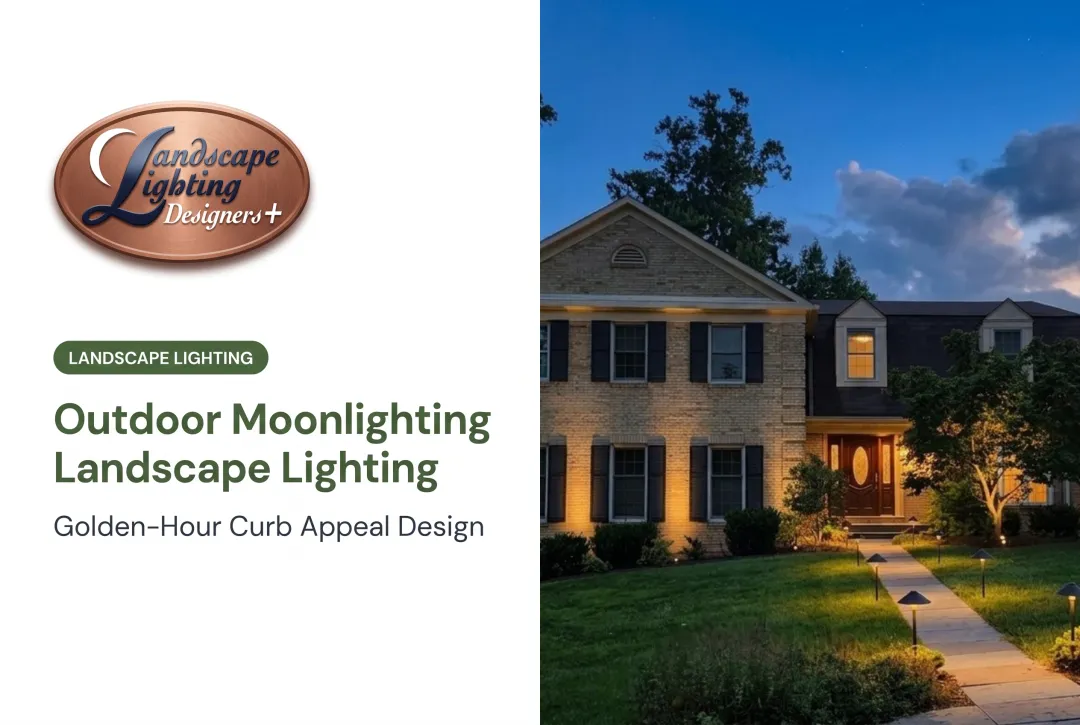
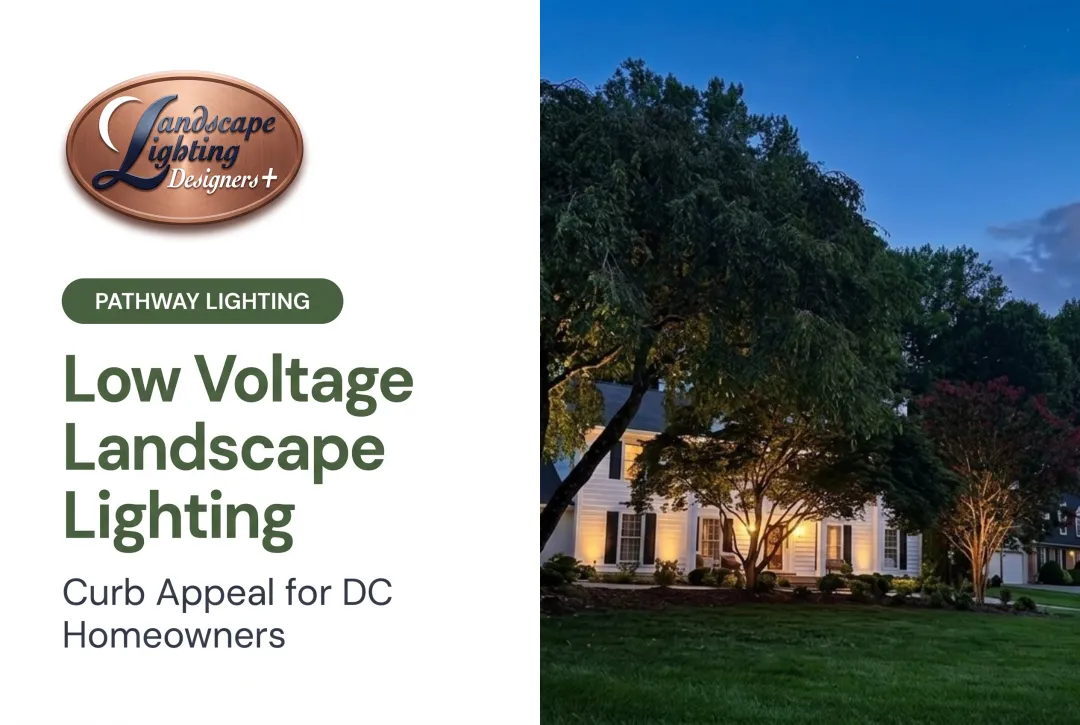
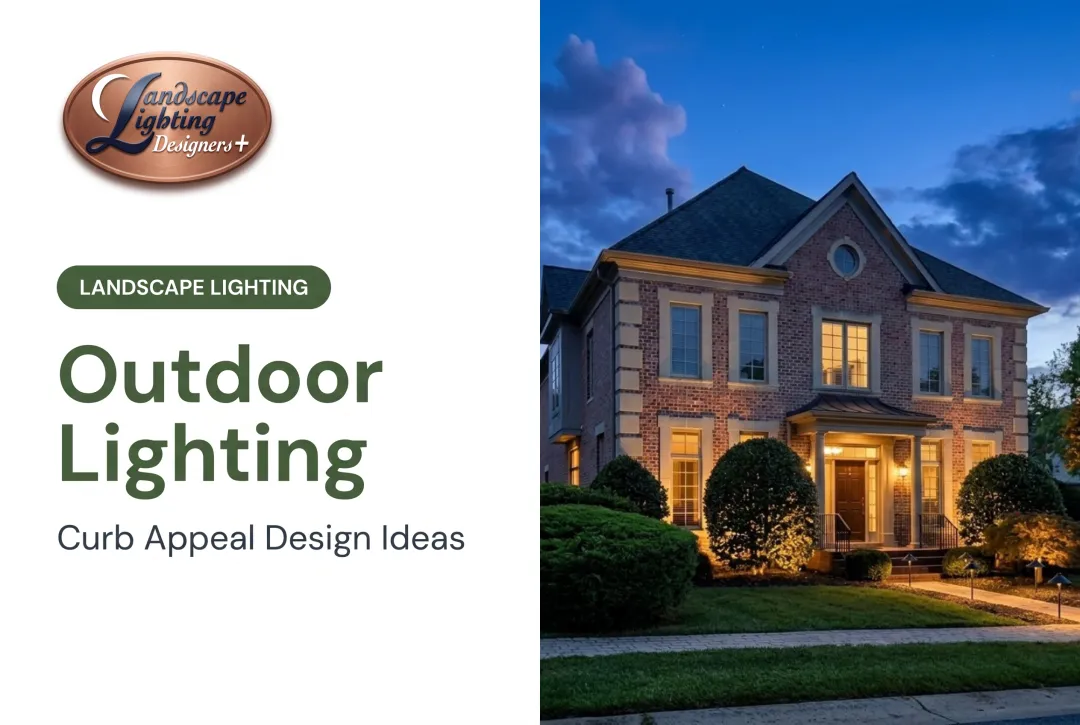
Photographs settle this faster than descriptions—our lighting project gallery shows how these effects look after dark on finished homes.
Design Principles for Energy-Efficient Outdoor Lighting
Effective landscape lighting comes from strategic design: fewer well-placed fixtures that build depth and visual interest while cutting energy waste.
The Layering Technique
Professional designers use three lighting layers:
- Ambient lighting: Soft, warm background glow that sets a welcoming mood without harsh brightness
- Task lighting: Pathway safety, entrance visibility, step illumination, and easy navigation
- Accent lighting: Focused light on specimen trees, architectural details, water features, and key plantings
This layered approach creates visual interest and depth while using fewer fixtures than indiscriminate over-lighting. Each layer serves a distinct purpose, and together they produce cohesive, balanced results.

The Principle of Restraint
The most common mistake in landscape lighting is over-illumination (the "theme park effect") that trades natural beauty for spectacle. Strong design follows a few simple rules:
- Illuminate only the property's most important features
- Use shadows and darkness as design elements, not problems to eliminate
- Preserve the landscape's organic character rather than overwhelming it
- Choose subtlety over intensity so viewers notice the features, not the fixtures
Sarah S. worried about "too much light" before her installation and found the finished project perfectly balanced. Kevin B. called his system "impressive as it is subtle."
Smart Controls for Efficiency
Even the most efficient fixtures waste energy when operating unnecessarily. Strategic control systems ensure lights run only when needed:
- Timers: Limit run time to evening hours when lighting actually delivers value
- Photocells: Adjust on/off timing based on natural light levels
- Motion-activated zones: Security light for side yards, garage approaches, and back gates only when needed
- Smart controls: Scheduling, remote management, and home-automation integration
Used together, these controls keep safety, security, and curb appeal intact while lights stay off whenever they are not earning their keep.
Choosing the Right Energy-Efficient System for Your DC Metro Home
Key Factors to Consider
Several variables shape an energy-efficient lighting plan for your property.
Property size and layout drive fixture count, transformer capacity, and zoning. Zoning lets you run only the circuits you need, so a compact Georgetown townhome and a multi-acre Potomac estate use power very differently.
Architectural style guides efficient fixture choice and placement:
- Federal and historic homes suit low-profile LED fixtures, concealed wiring, and preservation-conscious designs
- Victorian and Edwardian properties use layered light on facades, porches, and entries without over-lighting
- Contemporary homes rely on precise accent LEDs and deliberate shadow to keep wattage low and geometry clean
Landscape features set technique and beam control: mature trees, garden beds, water features, stonework, pathways, and hardscape each need the right optic so light lands on the target, not the sky or neighbors.
Security and safety needs set pathway coverage, entrance light levels, and motion-activated zones. Motion and photocell controls cut runtime in vulnerable areas while keeping nights usable.
The Professional Design Advantage
DIY kits are easier to buy than they used to be, but a professional low-voltage design still outperforms them on efficiency, longevity, and look:
- Evaluates architecture, landscape, and goals so every watt supports a clear purpose
- Sizes transformers, selects LED fixtures, and plans wiring for load, voltage drop, and future zones
- Builds balanced compositions instead of scattered bright spots that waste energy
- Installs to proper burial depth, waterproofing, and code requirements
- Refines aim after dark so beams hit the subject, not empty lawn or windows
- Supports maintenance, seasonal tweaks, and expansion without rebuilding the system
Craig Collins of Landscape Lighting Designers Plus has served the DC metro area for over 21 years, personally designing each project with no project managers or sales reps. Clients average a 4.8-star rating across 37+ verified reviews, and many return for maintenance and creative updates across eight-plus years.
Cost Savings and Long-Term Value of Energy-Efficient Lighting
Verified Operating Savings
The operating cost advantage of LED landscape lighting is easy to measure:
- $40.62 to $131.83 in annual electricity savings across typical DC metro installations (depending on jurisdiction, fixture count, and nightly operating hours)
- Monthly operating costs of $0.90 to $2.92 for LED systems versus $4.32 to $13.89 for equivalent halogen installations
- Fewer bulb replacements over decades of use, without the output drop common to traditional bulbs
These savings compound over time, with the energy cost difference often exceeding the installation premium within a few years.
Beyond Energy: Total Value Factors
Energy savings are the easiest number to track. Professional landscape lighting also adds value in ways that show up every night:
- Illuminated pathways, steps, entrances, and property edges lower trip risk and liability exposure
- Decks, patios, pools, and seating areas stay usable after dark, extending outdoor living hours
- Stronger curb appeal at night supports first impressions when you entertain or list the home
- Plantings, seasonal displays, and architecture stay visible year-round, not only in daylight
- Steady light plus motion-activated zones improves visibility and discourages casual intruders
Homeowners rate that mix highly. A National Association of Realtors study gave outdoor lighting a Joy Score of 10, the top mark on the scale.
If you are still weighing options, a nighttime preview of your own home removes most of the guesswork.
Frequently Asked Questions
What type of landscape lighting is most energy efficient?
LED low-voltage fixtures operating at 12 volts are the most energy-efficient option. They use up to 79% less energy than traditional halogen bulbs, with better light quality, precise beam control, and much longer lifespans.
How much electricity do landscape lights use?
Professional LED landscape fixtures typically draw 2-15 watts per fixture depending on application. A typical 10-15 fixture residential system costs approximately $0.90-$2.92 per month to operate in the DC metro area, varying by jurisdiction and nightly operating hours.
How many lumens do I need for outdoor landscape lighting?
Pathway lighting typically requires 85-150 lumens per fixture for residential walkways, according to manufacturer guidelines. Accent and security applications use higher outputs, but specific requirements depend on the feature being illuminated, distance, and desired emphasis.
How long do LED landscape lights last?
Quality LED landscape fixtures are rated for 50,000-72,000 hours, translating to approximately 22-49 years with typical evening-only operation (4-6 hours nightly). This compares to just 1,000-2,000 hours for traditional incandescent and halogen bulbs.
Can energy-efficient landscape lighting provide enough brightness?
Modern LEDs deliver strong brightness and light quality compared to older technologies, with precise beam control that puts light where you need it. Professional systems balance brightness with subtlety so spaces feel lit, not harsh.
Is professional design worth the investment for landscape lighting?
Professional design ensures optimal fixture placement, prevents over-lighting, maximizes efficiency, and creates cohesive results DIY approaches often miss. The National Association of Realtors found professional LED landscape lighting delivered a 59% cost recovery ratio and strong homeowner satisfaction scores.
Energy-efficient landscape lighting improves nighttime curb appeal, safety, and outdoor living hours while cutting operating costs for years. Professional LED systems use up to 79% less energy than traditional alternatives and last 25-50 times longer.
Homeowners in Bethesda, Potomac, Chevy Chase, Rockville, and Washington DC can start with a complimentary consultation from Landscape Lighting Designers Plus. Contact Craig Collins at (888) 582-8845 or contact@landscapelightingnow.com to plan a low-voltage LED system for your property.