Atmospheric lighting for outdoor spaces is fundamentally different from interior lighting. It requires specialized knowledge of landscape design, weather durability, and architectural integration. Low-voltage landscape systems (12V) have become the foundation of professional outdoor lighting because they're safer, more energy-efficient, and better suited to creating subtle, layered effects that highlight what matters most: your trees, gardens, architectural lines, and outdoor living areas.
This guide explains what atmospheric lighting means in landscape contexts, why it matters for residential properties, the essential design elements that separate elegant installations from overlighted mistakes, and practical techniques for creating mood, depth, and beauty after dark.
Key Takeaways
- Atmospheric lighting prioritizes mood and beauty over harsh, purely functional floodlights
- Low-voltage 12V LED systems are safer, more efficient, and built for layered landscape effects
- Good outdoor lighting extends usable hours, boosts curb appeal, and improves safety without glare
- Subtle multi-height layering creates depth; overlighting flattens the scene and kills atmosphere
- Seasonal adjustments and maintenance keep the design working as plants and landscapes change
What is Atmospheric Lighting?
Atmospheric lighting is the strategic use of outdoor illumination to create mood, enhance perception, and transform the emotional experience of exterior spaces after sunset. Unlike security floods or basic pathway safety lights, atmospheric lighting prioritizes beauty, ambiance, and the artful interplay of light and shadow.
Professional landscape lighting treats illumination as a design layer, one that reveals your property's best features at night while keeping elegance and subtlety intact.
Craig Collins, owner and landscape lighting designer at Landscape Lighting Designers Plus, approaches every project as a designer first and installer second. His rule is simple: never overlight a property or trade quiet beauty for spectacle.
Atmospheric Lighting vs. Ambient Lighting
Ambient lighting typically refers to general background illumination—the foundational layer that provides overall visibility in a space, whether indoors or outdoors. The Illuminating Engineering Society (IES) defines it as "lighting throughout an area that produces general illumination."
Atmospheric lighting in landscapes goes beyond ambient light. It incorporates ambient illumination as one layer but adds accent lighting, shadowing, and dramatic effects to create a cohesive outdoor environment with depth and focus. Think of ambient light as the base layer; atmospheric lighting is the complete composition.
The Role of Low-Voltage Landscape Lighting
Low-voltage landscape lighting systems, typically operating at 12V, form the foundation of outdoor atmospheric lighting. Fine Homebuilding explains that line-voltage systems run at 120V, while low-voltage systems use a transformer to step down to a safer 12V. That setup makes installation easier and lets you move fixtures as the landscape changes.
Why low-voltage systems are preferred over 120V house-mounted lights:
- Safety: 12V systems reduce shock risk, especially around water features, pools, and irrigation zones
- Flexibility: Fixtures can be repositioned as trees grow, gardens mature, or design priorities shift
- Control: Low-voltage systems provide better intensity control, dimming capabilities, and layering precision
- Harmony: Landscape fixtures integrate naturally with gardens, trees, and architectural features rather than competing with them

LED technology strengthened the case for low-voltage landscape lighting. ENERGY STAR reports that LEDs use up to 90% less energy than traditional bulbs at the same brightness and last 15 times longer. Paired with 12V flexibility, that efficiency makes LED low-voltage systems a strong fit for residential atmospheric lighting.
Landscape Lighting Designers Plus works only with low-voltage landscape fixtures, not 120V house-mounted lights, so every design stays safe and tied to the landscape itself.
Why Atmospheric Lighting Matters for Outdoor Spaces
Extending Outdoor Living Hours and Usability
Well-designed atmospheric lighting transforms outdoor spaces into usable, inviting environments well into the evening. Houzz's 2026 Outdoor Trends Study surveyed 1,191 US homeowners and found that 66% of renovated outdoor lounge areas included outdoor lighting, with extending relaxation into evening hours as a common theme.
Atmospheric lighting supports outdoor dining, entertaining, and relaxation by creating zones for different activities: a softly lit patio for conversation, accent lighting on garden focal points, and gentle pathway illumination that guides guests without harsh glare.
Enhancing Curb Appeal and Property Value
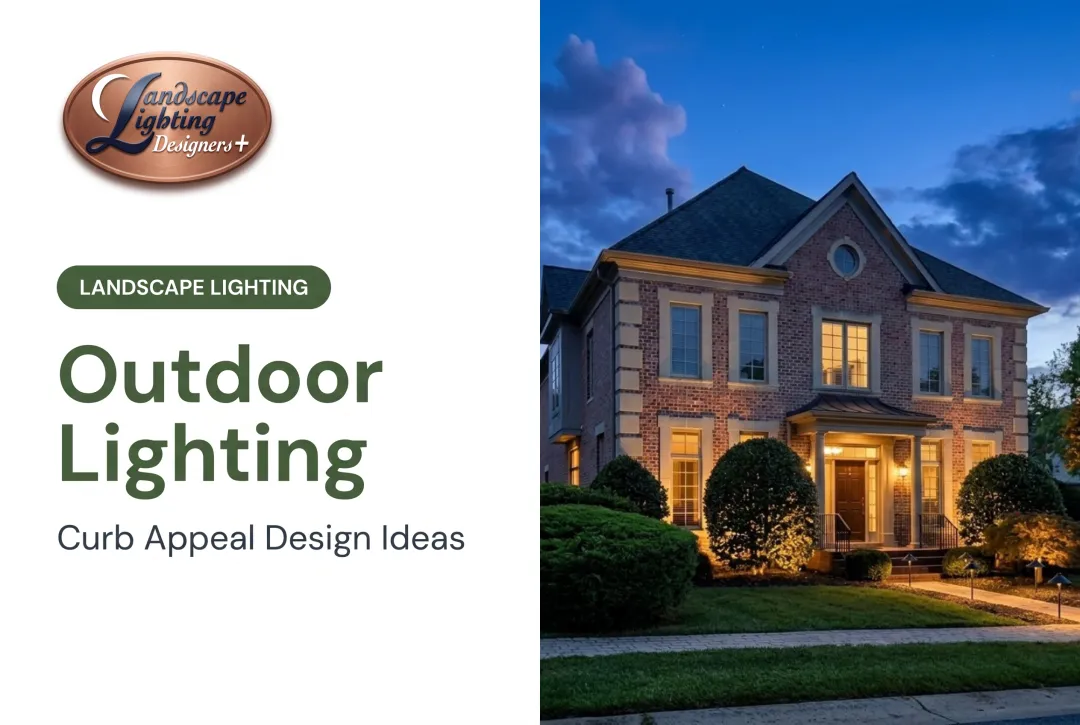
Atmospheric lighting boosts a home's nighttime curb appeal, creating visual interest and architectural emphasis that's invisible during daylight. The National Association of REALTORS® (NAR) 2023 Remodeling Impact Report found that 92% of real estate professionals had suggested improving curb appeal before listing, and 97% considered curb appeal important in attracting buyers.
NAR separately identifies outdoor lighting as serving style, ambiance, safety, and curb appeal, citing dramatic uplighting and soft downlighting as effective exterior presentation techniques. While these findings reflect professional perceptions about marketability rather than appraised-value increases, the consensus is clear: quality landscape lighting makes homes more attractive to potential buyers.
Homeowners notice the difference quickly. Dimitri M., a Landscape Lighting Designers Plus client, said his home looked beautiful at night for the first time in 16 years after replacing and expanding his system. Juan P. reported that after eight years of maintenance and updates, his property's front and back nighttime appearance stood out in the neighborhood.
Creating Emotional Connection to Outdoor Spaces
Atmospheric lighting shapes emotional responses such as warmth, tranquility, drama, and romance, making outdoor spaces feel more intimate. Thoughtfully designed lighting allows homeowners to experience their gardens, trees, and architectural features in entirely new ways after dark.
Common techniques that build that mood include:
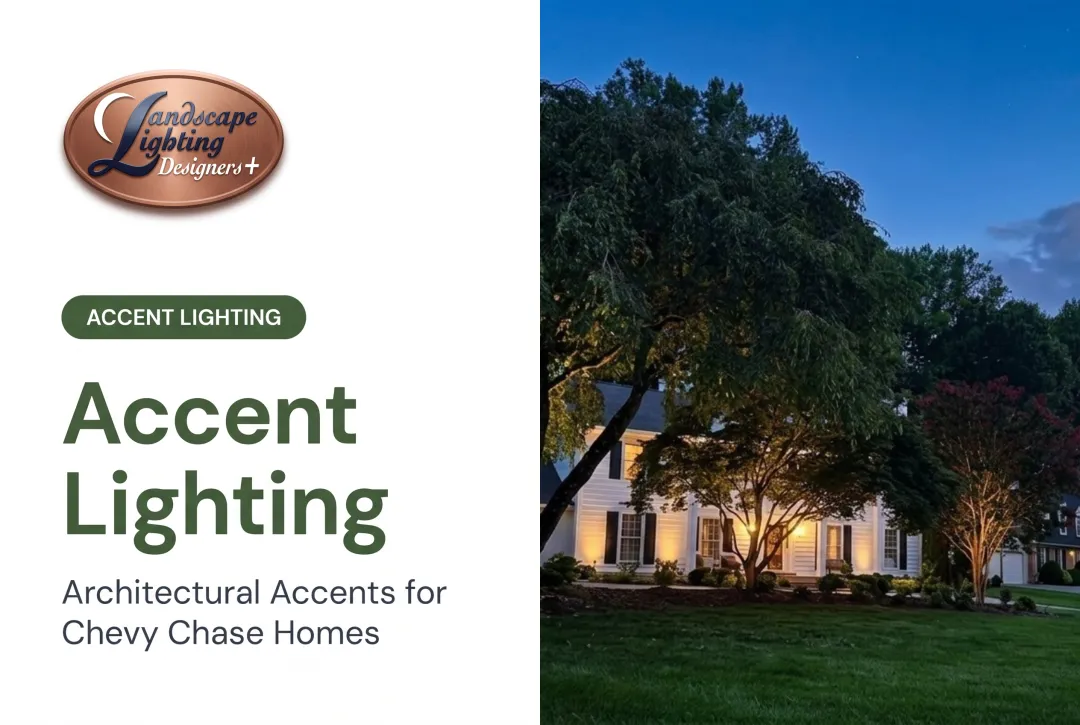
- Uplighting mature trees to cast canopy shadows
- Downlighting through branches to mimic natural moonlight
- Accenting stone walls or water features for texture and depth
Used together, these choices change how you see and use the property after dark.

Safety and Security Without Sacrificing Beauty
Atmospheric lighting improves safety by illuminating steps, pathways, and grade changes while providing a gentle security presence, without harsh floodlights that destroy ambiance.
DarkSky International reports that more outdoor lighting has not been shown to deter crime. Bright, unshielded fixtures can constrict pupils, deepen perceived shadows, and impair low-light adaptation. Aim for visibility and wayfinding, not maximum brightness.
Well-designed atmospheric lighting still meets safety needs without turning the yard into a glare zone:
- Low-glare path lights guide movement
- Even ambient coverage reduces dark pockets near entries and side yards
- Motion-activated zones add visibility at garage approaches or back gates
Seasonal and Year-Round Appeal
Atmospheric lighting extends enjoyment of outdoor spaces across all seasons, highlighting snow-covered gardens in winter, fall foliage, spring blooms, and summer entertaining spaces. Landscape lighting design should account for how trees, plants, and sightlines change throughout the year.
Deciduous trees that provide lush canopy downlighting in summer reveal dramatic branch structures in winter. Evergreens maintain year-round presence. Seasonal flower beds and perennial gardens shift the visual focal points. Professional designers plan for these changes, positioning fixtures to remain effective as the landscape evolves.
Key Elements of Effective Outdoor Atmospheric Lighting
Light Placement and Directional Control
Strategic placement techniques include:
- Uplighting: Ground-level fixtures light trees, architecture, and focal points from below, adding drama and vertical emphasis
- Downlighting: Fixtures in trees, pergolas, or overhead structures cast light downward to mimic moonlight and provide soft ambient cover
- Cross-lighting: Multiple fixtures at different angles build depth and prevent flat, one-dimensional illumination
- Path lighting: Low fixtures guide movement along walkways, driveways, and steps
- Grazing: Light skimmed across stone, brick, or wood siding to reveal texture and relief
Critical placement considerations:
- Avoid light trespass: Aim beams so light stays on your property and off neighbors' homes or yards
- Prevent glare: Shield fixtures and aim carefully so sources aren't visible from common viewing angles
- Resist overlighting: More fixtures don't create better atmosphere. Restraint and careful placement do
Color Temperature Selection for Outdoor Spaces
Outdoor atmospheric lighting typically uses warmer color temperatures (2700K–3000K) to create inviting, natural-looking illumination that complements landscapes and architecture. DarkSky International's residential luminaire guidelines set a maximum nominal color temperature of 3000K for responsible outdoor lighting.
When to adjust color temperature:
- 2700K: Warmest option for traditional homes, historic properties, and intimate gardens; closely matches incandescent light
- 3000K: Still warm, slightly cooler; suits contemporary architecture, stone hardscaping, and water features
- Plantings vs. architecture: Some designers prefer 2700K for gardens and 3000K for stone or modern materials, though consistency often looks best
Landscape Lighting Designers Plus commonly specifies 2700K–3000K warm-white LEDs for residential projects, particularly for historic homes in Chevy Chase, Georgetown, and Capitol Hill, where warmer tones complement traditional architecture.
Layering Light for Depth and Interest
Layering light sources at different heights, intensities, and angles creates visual depth and avoids flat, one-dimensional lighting. You're composing a nighttime scene, not just washing objects with light.
Typical layers in landscape atmospheric lighting:
- Ambient/moonlighting layer: Broad, soft downlighting from overhead for general visibility and baseline illumination
- Accent layer: Focused uplighting or spotlights on specimen trees, architectural details, water features, or focal plantings
- Task layer: Functional light for pathways, steps, decks, and entries so people can move safely
- Shadow play: Intentional dark zones that add mystery, depth, and contrast
Example of effective layering:

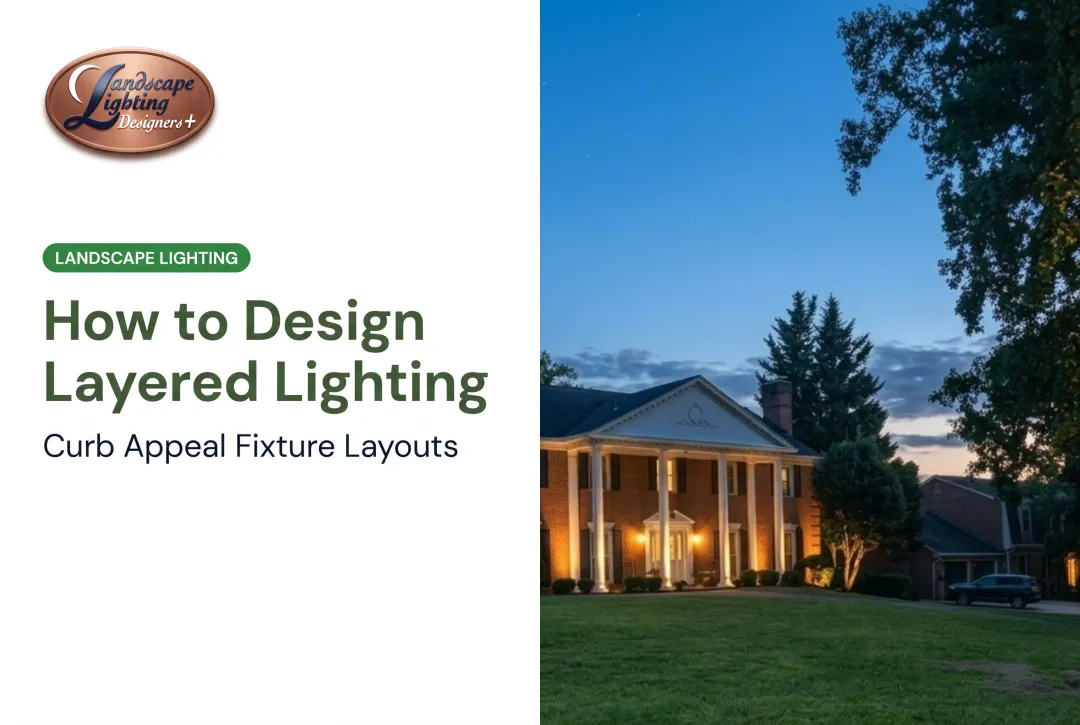
A well-designed front yard might use soft downlighting through a mature oak canopy for the ambient layer. Uplighting on the home's brick facade and stone columns handles accent. Low path lights along the walkway cover the task layer, while unlit side garden beds supply contrast and shadow. Each layer has a job, and together they form a cohesive, three-dimensional nighttime scene.
Intensity, Brightness, and the Power of Restraint
Atmospheric lighting depends on subtlety: use the minimum light needed for the effect you want, and let darkness and shadow do real work. "Just enough light" beats overlighting every time in elegant outdoor design.
DarkSky International's five principles for responsible outdoor lighting emphasize keeping light no brighter than necessary, targeting it only where needed, and using controls like timers, motion sensing, or dimming. Their residential luminaire program caps total output at 1,000 lumens per fixture and permits no more than 50 lumens above the horizontal zone to minimize light pollution.
Why restraint matters:
- Preserves mystery and elegance: Overlighting flattens the scene and erases depth
- Reduces light pollution: Excess brightness spills onto neighbors' property and washes out the night sky
- Enhances lit features: Contrast and shadow make illuminated elements read more clearly
- Respects the night: Wildlife, plants, and human circadian rhythms benefit from darker nights
Craig Collins's design philosophy emphasizes balance, subtlety, and elegance, never overlighting a property. Client Sarah S. specifically noted she was afraid of too much light but reported that the final result turned out perfectly.
Fixture Selection and Aesthetic Integration
Fixture design, finish, and quality affect both the lighting result and daytime appearance. Fixtures should either blend into the landscape or serve as intentional design elements.
Considerations when selecting fixtures:
- Beam spread: Narrow spots (10–25°) for distant or tall features; medium floods (40–60°) for broader coverage
- Shielding: Controls glare and beam direction; essential for responsible lighting
- Adjustability: Adjustable heads and output support fine-tuning at install and through the seasons
- Weather durability: IP66 for above-ground fixtures exposed to rain; IP67 for in-ground wells exposed to moisture and debris
Material and finish considerations:
- Brass and copper: Develop an earthy patina over time, a strong fit for traditional landscapes
- Powder-coated aluminum: Lightweight, corrosion-resistant, and available in many colors
- Stainless steel: Modern look, highly durable, and suited to coastal or high-moisture sites
Landscape Lighting Designers Plus emphasizes unobtrusive, natural-looking fixtures that blend with the landscape while improving ambiance, safety, and nighttime usability.
Controlling Light Pollution and Dark Sky Principles
Responsible outdoor lighting design minimizes upward spill, reduces trespass onto neighbors' properties, and preserves views of the night sky. DarkSky International's principles offer a clear framework for beauty and environmental responsibility together.
Key Dark Sky principles:
- Use light only for a clear purpose: Every fixture should earn its place
- Target it only where needed: Aiming and shielding prevent spill and glare
- Keep it no brighter than necessary: Lower intensity builds atmosphere and cuts pollution
- Control it: Timers, motion sensing, and dimming limit unnecessary run time
- Use warmer color: Stay at or below 3000K to limit blue-violet content
Practical application:
- Shield and aim fixtures so beams point down and stay inside the intended area
- Choose fixtures with no upward output above the horizontal plane
- Dim after peak evening hours, or use motion zones only when needed
- Respect lighting zones. Residential areas typically fall in Zone 1 (low ambient light) or Zone 2 (moderate ambient light)
Done well, atmospheric lighting looks refined at night and still meets Dark Sky expectations on brightness, aim, and color.

If you want to see how this reads once it is installed, our gallery of completed lighting projects shows the approach on real properties.
Techniques for Creating Outdoor Atmosphere with Light
Professional landscape lighting relies on a handful of proven techniques that shape mood as much as visibility.
Moonlighting places fixtures high in tree canopies and aims light downward. Soft, dappled illumination hits the ground below and reads more like natural moonlight than a staged effect.
Silhouetting puts light behind an object so its form appears as a dark shape against a wall, fence, or other backdrop. Sculptural plants, garden art, and architectural details all respond well to this treatment.
Grazing skims light across stone, brick, or wood at a sharp angle. Texture and relief come forward, giving flat surfaces real depth after dark.
Shadowing and negative space matter as much as the fixtures themselves. Leaving some areas intentionally dark builds contrast, so the lit spots feel deliberate rather than scattered.
Zoning and scene-setting divides the landscape into lighting areas with different moods or jobs:
- Intimate dining patio: Warm, low-level light with soft downlighting and gentle accents on nearby plantings
- Dramatic garden focal point: Uplighting on specimen trees, plus accents on water features or sculpture
- Softly lit walkway: Low-profile path lights spaced for safe guidance without glare
Each zone keeps its own character while still reading as one cohesive composition.
Choosing Fixtures for Landscape Atmospheric Lighting
Fixture choice is what turns atmospheric lighting from a mood board into a finished nightscape. Match type, beam, and finish to each part of the property so light feels intentional, not scattered.
Common fixture types
These five families cover most residential atmospheric work:
- Path lights: Low-profile fixtures for walkways, driveways, and steps; support wayfinding and safety without glare
- Uplights and spotlights: Ground-level directional fixtures for trees, architecture, and focal points; adjustable beam and output matter most
- Well lights (in-ground): Recessed units set flush with grade for uplighting trees or hardscape where feet and mowers pass
- Hardscape lights: Built into walls, steps, seat walls, or columns for usable light and quiet architectural emphasis
- Pendants and hanging fixtures: Options for pergolas, arbors, patios, and dining areas that blend task light with style
Matching fixture to application
Pick beam and mount from the job, not the catalog page:
- Trees: Compact adjustable spots with narrow to medium beams (10–40°) and output control (for example, WAC Mini Accent 12V, 1W–7W with continuous beam adjustment)
- Architecture: Wall-wash or medium-flood beams that even out facades, columns, and stonework
- Walkways: Down-aimed path lights with little upward spill, spaced about 8–12 feet apart based on output and path width
- In-ground wells: IP67-rated fixtures that handle moisture and debris (WAC 3-inch recessed 12V LED is one option up to 505 lumens in 2700K or 3000K)
Materials, finish, and durability
Finish affects both look and how the system ages outdoors:
- Brass and copper: Develop a natural patina; strong fit for traditional or naturalistic landscapes
- Powder-coated aluminum: Lightweight, corrosion-resistant, and common in black, bronze, and architectural white
- Stainless steel: Clean modern look and high durability on wet or high-moisture sites
Corrosion warranties vary by brand (some, such as Vista Professional Lighting, publish 10-year coverage on powder-coated, natural-metal, and composite fixtures). A low-voltage designer can match beam, IP rating, and finish to your architecture and site conditions so the install stays subtle and holds up.

Common Mistakes and How to Avoid Them
Over-lighting or Using Too Many Fixtures
The mistake: Assuming more light equals better atmosphere: installing too many fixtures, setting output too high, or eliminating all darkness and shadow.
The fix: Embrace restraint. Use the fewest fixtures and the lowest practical intensity that still meet your goals. Dark zones and shadow create contrast, depth, and visual interest.
One well-placed uplight on a specimen tree often delivers more impact than four mediocre fixtures scattered across a garden bed.
That restraint matches Craig Collins’s approach—balance, subtlety, and elegance. Client Sarah S. worried about too much light and found the restrained design turned out perfectly.
Using Incorrect Fixture Types or Poor Shielding
The mistake: Using high-voltage security floods when atmospheric lighting is the goal, or selecting fixtures without proper shielding that create glare and light trespass.
The fix: Choose low-voltage landscape fixtures designed for atmospheric use. Look for shielding, adjustable heads, and real beam control.
DarkSky-approved fixtures meet strict criteria:
- Maximum 1,000-lumen output
- Shielding so the source isn’t visible from the horizontal plane
- No more than 50 lumens above the horizontal zone
Neglecting Maintenance and Seasonal Adjustments
The mistake: Treating landscape lighting as “set it and forget it,” ignoring plant growth, debris, fixture aiming drift, and seasonal changes that alter the intended effect.
The fix: Plan for ongoing maintenance. Kichler recommends professional property checks once or twice a year.
FX Luminaire specifies a simple cadence:
- Quarterly: Straighten path lights, adjust vegetation, clean well lights
- Semiannual: Check cables and re-aim fixtures
- Annual: Tighten terminals and clean lenses
Landscape Lighting Designers Plus provides ongoing maintenance and adjustment services.

Client Juan P. reported about eight years of maintenance and updates that kept the property’s nighttime look strong as the landscape evolved. Client Brent L. noted that Craig returned several times after installation to reposition lights for the best presentation.
Homeowners who want certainty before installation can preview their home at night with an on-site demonstration.
Frequently Asked Questions
What is atmospheric lighting?
Atmospheric lighting is the strategic use of outdoor illumination to create mood and shape how you experience exterior spaces after dark. It goes beyond safety lighting by layering ambient light, accent highlights, and controlled intensity.
What are the three types of lighting?
The three types are ambient (overall background illumination), task (functional light for pathways or activities), and accent (highlighting trees, architecture, or water features). Atmospheric landscape lighting typically balances all three.
What exactly is ambient lighting?
Ambient lighting is the foundational layer that provides general illumination across a space. The Illuminating Engineering Society defines it as "lighting throughout an area that produces general illumination." Outdoors, moonlighting and broad downlighting often fill this role.
How is outdoor atmospheric lighting different from interior lighting?
Outdoor lighting must handle weather, larger spaces, natural elements, and seasonal change, not just interior furnishings. It uses weather-rated fixtures and typically 12V low-voltage systems, and it accounts for light pollution, dark-sky principles, and plant growth over time.
What fixtures work best for landscape atmospheric lighting?
Low-voltage LED fixtures with adjustable beams, quality shielding, and durable finishes work best. Common options include uplights, spotlights, path lights, in-ground wells, and hardscape lights, typically at 12V with warm color temperatures (2700K–3000K).
Can landscape lighting create atmosphere while improving security?
Yes. Well-designed atmospheric lighting improves safety by gently illuminating pathways, entries, and the property perimeter without harsh floodlights. The goal is visibility and wayfinding, not maximum brightness, so ambient coverage and selective motion zones can deter hiding spots while keeping the layered look intact.
Ready to transform your outdoor spaces with professional atmospheric lighting? Landscape Lighting Designers Plus has served homeowners throughout Bethesda, Potomac, Chevy Chase, Rockville, and Washington, DC for over 21 years, delivering custom low-voltage landscape lighting systems that blend artistry, safety, and energy efficiency. Owner Craig Collins personally designs every project with no project managers or sales reps—just expert guidance tailored to your home's architecture and landscape. Contact us at (888) 582-8845 or contact@landscapelightingnow.com for a complimentary consultation.