According to the Department of Energy, LED technology uses up to 90% less energy and lasts up to 25 times longer than traditional incandescent bulbs, making professional LED landscape lighting both an aesthetic upgrade and a practical long-term investment. This guide explores inspiring LED lighting projects for different areas of your home's exterior, from pathways and garden beds to architectural features and outdoor entertainment spaces, with design insights that separate professional results from amateur installations.
Key Takeaways
- LED landscape lighting boosts curb appeal, safety, and usable evening hours outdoors
- 12V low-voltage systems outperform 120V on efficiency, install safety, and landscape fit
- Professional design layers light with balance and clear focal points—not just more fixtures
- Match the goal to the space: pathways for safety, uplighting for drama, patios for entertaining
Pathway & Garden Lighting Projects
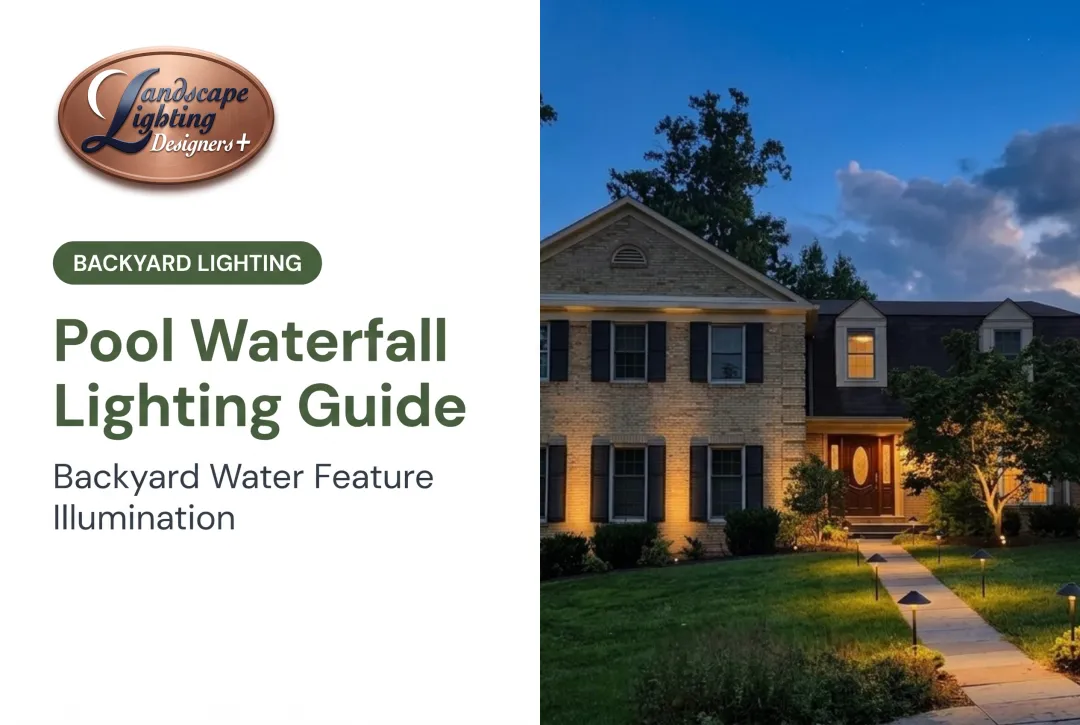
Pathway lighting serves dual purposes: it eliminates trip hazards along walkways, steps, and grade changes while creating visual interest that guides guests through your landscape. Well-designed path lighting illuminates the ground plane without causing glare or overwhelming garden beds and plantings. Rebuilding Together notes that strong walkway lighting improves safe navigation, especially for aging homeowners or properties with uneven terrain.
Design Approach:
Low-profile LED path lights create soft pools of light along walkways, driveways, and garden borders. Kichler recommends spacing fixtures 10-14 feet apart and staggering them on alternating sides of the path where access permits.
For safe navigation, residential walkways typically need 85-150 lumens per fixture. Actual needs vary with path width, surface reflectance, and ambient light.
Technical Considerations:
- Fixture placement: Illuminate the path surface, not visitors' sight lines
- Beam control: Use shielded fixtures that direct light downward, per DarkSky International's principles
- Garden bed accents: Soft uplighting or downlighting highlights beds and borders without competing with path fixtures
- Step lighting: Integrated lights define elevation changes on flagstone, brick, or concrete stairs

Regional Style Considerations:
For DC metro area homes—particularly Federal, Victorian, and Colonial architecture common in Bethesda, Chevy Chase, and Georgetown—bronze, copper, and black fixture finishes complement traditional brick and stone materials better than bright metals. Warm white LEDs in the 2700K-3000K range enhance masonry tones while maintaining period-appropriate ambiance.
Architectural Accent Lighting Projects
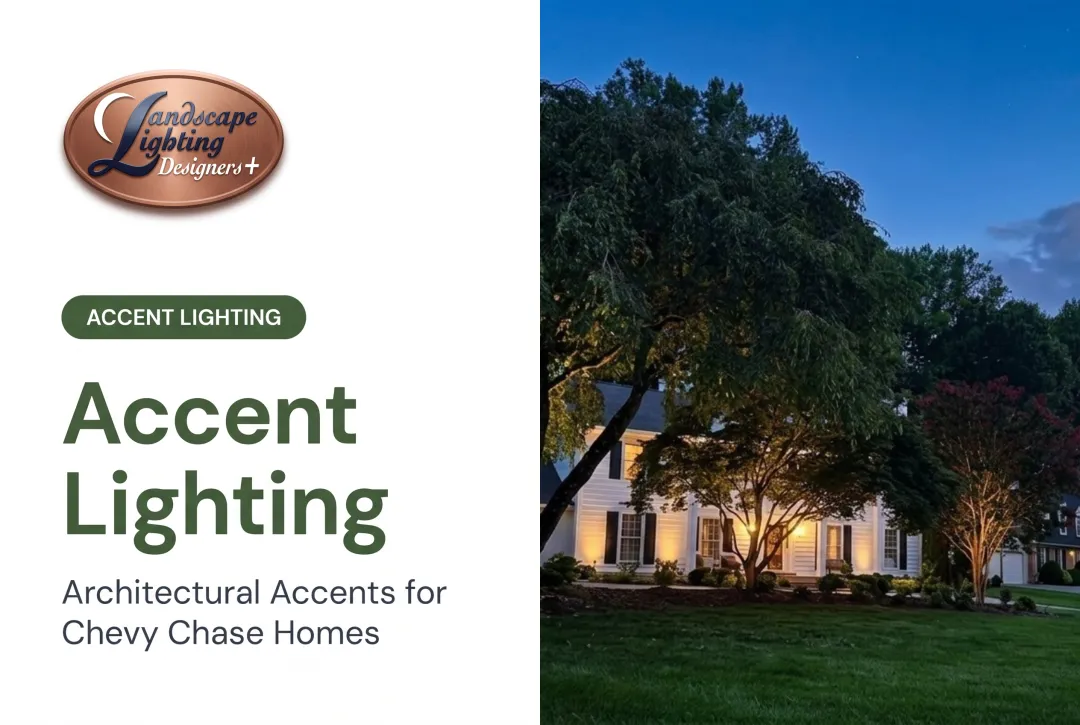
Architectural lighting transforms your home's façade from a dark silhouette into a dramatic focal point. Strategic uplighting, grazing, and washing techniques draw attention to columns, textured surfaces, entryways, and unique design elements that define your property's character.
Uplighting Techniques
Uplighting directs LED beams upward to emphasize vertical architectural features. This technique works well on brick, stone, and textured surfaces common throughout the DC metro area. Place fixtures at carefully calculated distances from the wall: too close creates hot spots, too far loses impact.
Best Applications:
- Brick and stone façades that benefit from texture emphasis
- Columns and pillars that define entryways
- Architectural details like cornices, pediments, and decorative molding
- Chimneys and other vertical elements
Grazing vs. Washing
WAC Lighting distinguishes two distinct wall-lighting approaches:
Grazing uses directional fixtures positioned within 12 inches of the wall surface, casting shadows that reveal texture, masonry joints, and surface irregularities. This technique creates dramatic contrast ideal for stone walls, textured stucco, and aged brick.
Washing seeks visual uniformity, positioning fixtures farther from the wall with wider beam spreads to eliminate shadows and create smooth, even illumination across the entire surface.

Historic Home Considerations
DC metro neighborhoods—from Georgetown row houses to Federal-style townhomes—often sit in historic districts where exterior lighting must protect the building fabric. Preservation-minded practice, including guidance aligned with Historic England's external lighting advice, favors a light touch:
- Leave some elevations unlit so the composition stays balanced
- Test designs on-site before permanent installation
- Conceal cable routes within existing architectural details
- Use reversible mounting methods
- Mount fixtures in mortar joints, not historic masonry
- Add hoods, baffles, and asymmetric optics to control glare and hit only the intended features
Color Temperature Guidelines:
No single rule fits every façade, but warm white LEDs (2700K–3000K) usually complement traditional materials. Final choice still depends on the surface: brick absorbs light differently than limestone, and weathered masonry responds differently than freshly cleaned stone.
When uplighting, grazing, and washing are matched to the architecture—and held back where the building should stay dark—the result is stronger nighttime curb appeal without washing out the details that give the home its character.
Outdoor Living & Entertainment Lighting
Many homeowners now treat yards as true living space, not just a view from indoors. LED lighting keeps patios, decks, and outdoor kitchens usable after sunset and sets the mood for guests.
Houzz's 2024 survey of 1,106 U.S. homeowners found that 33% renovated to extend living space, with the share rising to 41% among Gen X and 38% among Millennials. Among outdoor lighting upgrades, 81% included landscape lighting, 44% added string or bistro lights, and 37% installed porch sconces.
Patio & Deck Lighting
Effective patio lighting layers multiple fixture types:
- Perimeter lighting: Low-voltage fixtures define edges and create ambient glow
- Step and railing lights: Essential safety features that prevent falls
- Overhead downlighting: Mounted in pergolas or trees to wash light over seating areas
- Under-deck lighting: Creates a floating look and lights the level below
Design priority: Light steps, edges, and grade changes first for safety, then add ambient and accent layers.
Pergola & Gazebo Projects
Overhead structures give you solid mounting points for low-voltage LED strips, post fixtures, and decorative string lights. Aim downlighting at gathering spaces without harsh shadows on faces. Mount fixtures higher and use diffused sources rather than spotlights.
Outdoor Kitchen & Bar Lighting
Task lighting for cooking needs higher output than ambient entertainment light. Separate circuits give independent control: bright light for grilling, softer accent light for dining and conversation.
Position fixtures to light work surfaces without shining into the cook's eyes or creating glare for guests.

Pool & Water Feature Lighting Projects
Water changes how light behaves outdoors. Low-voltage LEDs along the perimeter, on decks and coping, and around fountains or falls can make a pool or water feature safer after dark and more inviting for evening use.
Pool Perimeter & Safety Lighting
Perimeter lighting improves visibility on decks, coping, and steps so wet surfaces are easier to navigate at night. In places such as Montgomery County, pool work often needs building and electrical permits—plan lighting near water with local code and setback rules in mind.
Design considerations include:
- Enough light for safe footing on wet decks and steps
- Glare control so swimmers and neighbors are not blinded
- Weather-resistant, wet-location-rated fixtures
- Low-voltage layouts that keep wiring appropriate for areas near water
Underwater LED Lighting
Lights built into the pool shell are usually part of the pool equipment package and often fall to a pool or electrical contractor. For landscape work around the water, 12V fixtures on the deck edge, in planting beds, or aimed at the surface add glow without line-voltage house circuits.
If the pool already has underwater LEDs—such as fixed-white or color-changing niche fixtures—treat them as one layer in the overall night scene. Match models when several are used together, and expect depth, finish, angle, and ambient light to change how the water reads. Warm-white still looks the most natural for everyday swimming; color modes work better when you are entertaining.
Fountain & Water Feature Lighting
Fountains, cascades, and rock falls respond well to low-voltage submersible or grade-level accents aimed at the moving water.
- Light falling water from below or behind so the motion reads clearly at night
- Use more than one soft aim on taller falls to show depth and texture
- Keep beams off primary seating and neighbor sightlines to limit glare
- Choose wet-location-rated fixtures and stable mounts that stay put in flow
Tree & Landscape Uplighting Projects
Mature trees offer opportunities to create depth, dimension, and dramatic shadows in yards. Uplighting techniques transform trees from daytime landscape features into nighttime sculptural elements.
Tree Uplighting Strategies
Kichler recommends specific beam angles based on tree size and structure:
- 10-15 degree spot: Narrow trunks, columns, or tall vertical elements
- 35-degree flood: Small deciduous trees (one fixture) or medium trees (two opposing fixtures)
- 60-degree spread: Broad canopies requiring wide coverage
Placement Considerations:

- Distance from the trunk depends on tree height, branch structure, and the effect you want
- Position fixtures to avoid beam obstructions from low branches
- For young trees, use adjustable-output fixtures so you can correct as the canopy expands
Moonlighting & Downlighting
High-mounted downlighting from mature tree canopies mimics natural moonlight, casting dappled shadows on lawns, patios, and garden beds. This technique creates an intimate atmosphere while providing functional illumination for outdoor spaces below.
Installation Cautions:
Ground-mounted uplights present minimal tree-health risks. Fixtures mounted in tree canopies need more care:
- Use non-penetrating hardware that allows for growth
- Avoid penetrating bark
- Plan periodic adjustment as the tree develops
Consulting an arborist helps protect mature specimens, particularly on historic properties with irreplaceable trees.
Shrub & Specimen Plant Lighting
Strategic accent lighting highlights ornamental shrubs, Japanese maples, specimen plantings, and seasonal interest. Lower-output fixtures reveal structure and form without overwhelming neighboring elements or creating harsh contrast.
Professional Design Considerations for LED Lighting Projects
DIY inspiration galleries show what's possible. Turning those ideas into cohesive, well-executed installations is where professional expertise makes the difference.
When DIY Should Become Professional
Simple projects—adding three or four path lights along a front walk—may suit confident DIYers with basic electrical knowledge. Comprehensive designs benefiting from professional expertise include:
- Whole-property lighting plans with multiple fixture types and circuits
- Complex installations on historic properties requiring preservation compliance
- Architectural lighting demanding precise aiming and beam control
- Systems integrating multiple outdoor living areas with independent zones
- Projects requiring voltage calculations, load balancing, and transformer sizing
Design Principles That Define Quality
Professional landscape lighting follows a few principles that create visual harmony:
- Balance: Spread light so you avoid hot spots and dark gaps; pair architecture, landscape, safety, and accent lighting
- Layering: Mix uplighting, downlighting, path lights, and accents for depth instead of flat, even wash
- Focal points: Guide the eye to specimen trees, architectural details, water features, and living spaces—not everything at once
- Restraint: More fixtures aren't better. Overlighting weakens impact, raises energy costs, and can bother neighbors

Creating Cohesive Plans
Effective lighting design considers multiple viewpoints simultaneously:
- Interior views: How does the lighting appear from inside the home looking out? Poorly positioned fixtures create glare through windows.
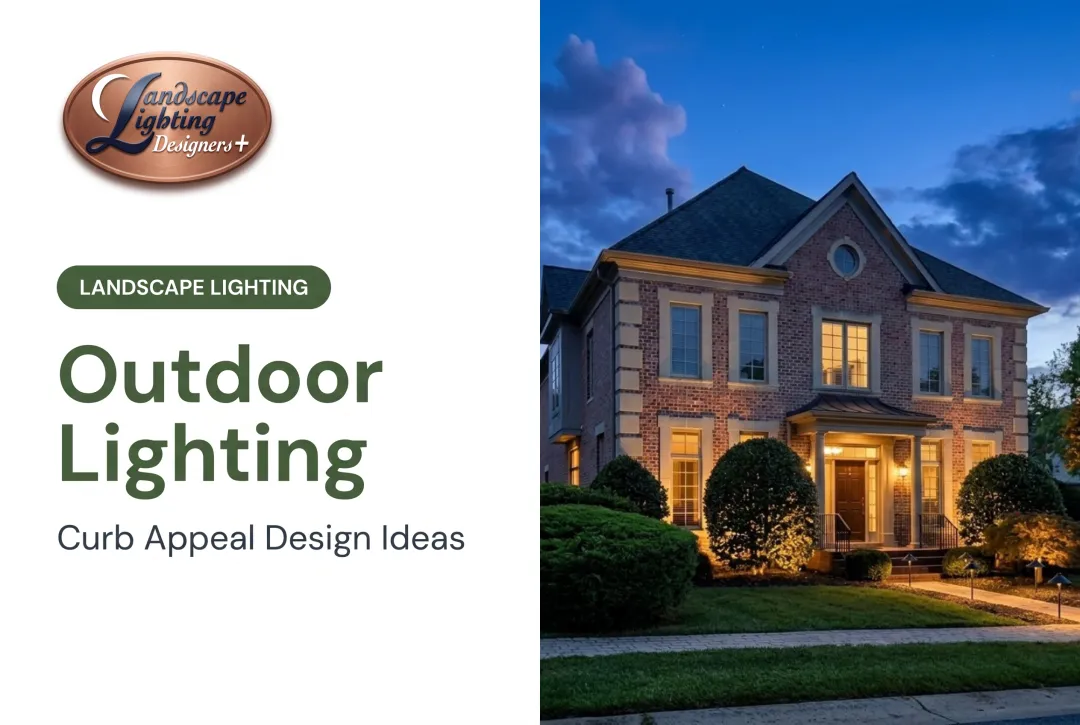
- Street appeal: The view from the curb establishes first impressions. Balance welcoming entry lighting with architectural accents and landscape features.
- Neighbor considerations: Avoid light trespass, glare, and excessive brightness that impacts adjacent properties. Proper shielding and aiming respect community standards.
DC metro homeowners also benefit from designers who know regional architecture (Federal townhomes, Victorian row houses, Colonial estates) and local conditions such as mature trees, historic gardens, and tight urban lots.
Landscape Lighting Designers Plus has served Bethesda, Potomac, Chevy Chase, Georgetown, and Washington DC for over 21 years. The practice uses a design-first, low-voltage approach built on balance, subtlety, and architectural sensitivity.
Long-Term Value of Professional Installation
A quality installation pays off well beyond the first night the lights turn on:
- Proper voltage calculations: Correct transformer sizing, voltage-drop math, and load balancing prevent dim end-of-run fixtures and early transformer failure
- Weatherproofing: Commercial-grade connections, sealed fixtures, and rated components handle moisture, temperature swings, and soil contact for decades
- Ongoing support: Seasonal aiming as plants grow, bulb changes, expansions, and repositioning—many client relationships last eight to ten years or more
- Energy efficiency: LED hour ratings (for example, 50,000 hours on some WAC products) only hold up with solid components and install. Systems built for 10–15+ years beat repeat DIY replacements on lifetime value
Homeowners who want certainty before installation can preview their home at night with an on-site demonstration.
Frequently Asked Questions
What is the difference between low-voltage and line-voltage landscape lighting?
Low-voltage systems run at 12V through a transformer that steps down standard 120V household current. They're safer around water and wet soil, easier to install, more energy-efficient, and better suited to landscaping. Line-voltage 120V systems are usually reserved for house-mounted fixtures and pose greater shock risks outdoors.
Can I install LED landscape lighting myself, or should I hire a professional?
Simple projects—like a few path lights along a straight walkway—can suit confident DIYers. Full designs with architectural uplighting, multiple circuits, voltage drop planning, and a cohesive look usually need a professional, especially on complex properties, historic homes, and whole-property plans.
How much does a professional landscape lighting project typically cost?
Cost depends on scope, property size, fixture count, and design complexity. A focused pathway or entry project costs less than a whole-property design with architectural accents and outdoor living zones. Quality low-voltage LED systems often last 10–15+ years, so durability and design quality matter as much as the upfront price.
What are the best LED lighting projects to increase home value?
Pathway lighting, architectural accent lighting, and outdoor living space lighting tend to deliver the strongest returns through better safety and aesthetics. Entry and facade lighting boost nighttime curb appeal, while patio and deck lighting extend usable outdoor space. The highest-value projects match your home's architecture and landscape features.
How long do LED landscape lights typically last?
Quality LED fixtures can last 15–20 years or 50,000+ hours, depending on component quality, installation conditions, and maintenance. Versus traditional halogen or incandescent landscape lighting, LEDs need far fewer replacements and less upkeep over the life of the system.
Do LED landscape lights work well in cold weather?
LED lights perform well in cold climates and often run more efficiently at lower temperatures. That makes them a strong fit for DC metro winters, where freezing weather and snow can hurt older lighting technologies. Fixtures rated for outdoor wet locations handle temperature extremes without degradation.