Introduction
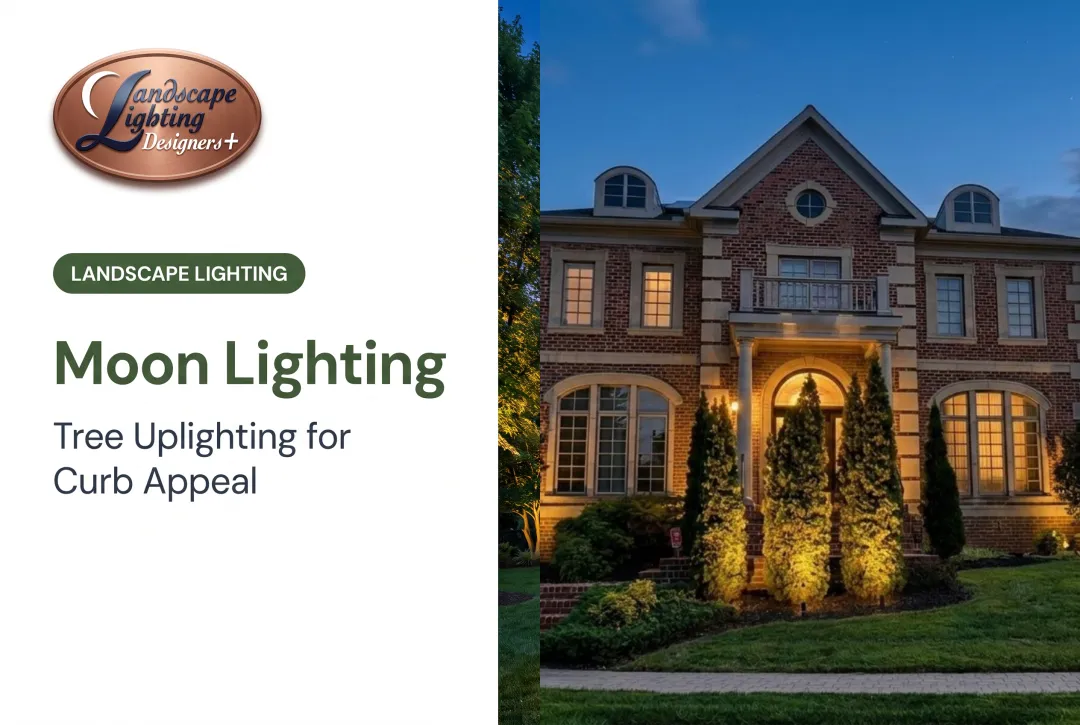
Picture this: a warm DC evening, soft light filtering through oak branches overhead, casting gentle dappled patterns across your patio. Soft moonlight glow, without waiting for the moon itself.
That effect is moonlighting: a landscape lighting technique that recreates nature’s most elegant light source. Fixtures placed high in tree canopies cast gentle, diffused light downward.
Many homeowners struggle to find outdoor lighting that feels natural rather than artificial. Standard downlights can create harsh pools of brightness, while poorly positioned fixtures often feel intrusive.
Moonlighting solves this by hiding the source entirely. Guests feel the effect without noticing where the light comes from, so the atmosphere enhances your outdoor spaces instead of overwhelming them.
This guide covers what moonlighting is, how it works technically, which DC-area trees work best, where to place fixtures on your property, and why professional installation matters for this technique.
Key Takeaways
- Mount fixtures 20–30 feet high in tree canopies for soft, dappled light through foliage
- Mature oaks, maples, and sycamores in Bethesda, Potomac, and Chevy Chase create ideal conditions
- Warm LEDs (2700K–3000K) with wide beam angles replicate natural moonlight tone
- Professional installation keeps tree mounts safe, fixtures durable, and wiring concealed
- Best results land over patios, pools, walkways, and outdoor living areas used after dark
What Is Moonlighting Landscape Lighting?
Moonlighting is a downlighting technique where fixtures are installed 20-30 feet high in tree canopies and directed downward through branches and foliage. FX Luminaire defines it as "the original downlighting effect," created by positioning light sources high in trees to cast diffused light downward.
Light filters through leaves and branches, creating soft, irregular, dappled patterns on the ground that mimic natural moonlight on a clear night. Kichler explains that fixtures placed high in trees catch branch and leaf details to emulate moonlight, producing an effect fundamentally different from standard structure-mounted downlighting.
How Moonlighting Differs from Standard Downlighting
Standard downlighting uses fixtures mounted on eaves, pergolas, or lower tree positions to deliver focused, task-oriented illumination—think dining tables, grills, or pathways. The light creates defined pools of brightness for specific functions.
Moonlighting prioritizes soft, natural, ambient atmosphere over functional illumination. Instead of focused pools, you get a diffused wash that spreads gently across the space below. The differences show up in four places:
- Source location: High in living tree canopy vs. any elevated position
- Light quality: Diffused through foliage vs. direct downward beam
- Design goal: Natural atmosphere vs. functional task lighting
- Visual effect: Irregular dappled patterns vs. uniform coverage
The key appeal is creating atmosphere without any visible light source. When installed at the right height, guests notice the soft glow but often can't tell where it comes from. The fixtures sit hidden in the canopy, so only the effect remains.
It suits many DC-area homes in Bethesda, Potomac, and Chevy Chase, where mature trees and outdoor entertaining spaces give you room for a natural look that still lights the ground below.
How Moonlighting Works: The Technical Details
Four variables work together to create authentic moonlighting: fixture height, beam angle, color temperature, and canopy density.
Fixture Height: The Foundation of the Effect
Height matters more than any other factor. Fixtures mounted 20-30 feet high create the effect; 25-30 feet is optimal. At these elevations, the light source becomes invisible from ground level. Guests see only the filtered glow, never the fixture itself.
Lower mounting (15 feet or less) fails to recreate moonlight. The fixture remains visible, and the light reads as artificial downlighting rather than a natural phenomenon.
Beam Angle: Wide Wash vs. Narrow Spots
Wide beams (40-60 degrees) produce a natural wash as light spreads through the canopy and filters down gradually. The broad distribution mimics how moonlight diffuses through atmosphere and foliage.
Narrow beams create artificial-looking spots: defined circles of brightness that feel more like stage lighting than a natural effect. The FX Luminaire JB downlight offers 35-degree and 60-degree optics, showing the range of beam choices available for different canopy conditions.
Color Temperature: Warm White LEDs
Warm white LEDs (2700K-3000K) replicate the tone of natural moonlight and complement wood, stone, and foliage without creating a clinical feel. Cooler temperatures (4000K and above) produce a harsh, artificial appearance that works against the natural aesthetic moonlighting aims to achieve.
Fairfax County generally limits outdoor residential lamps to 3000K or less, aligning regulatory requirements with design best practices for residential properties throughout the DC metro area.
Canopy Density: The Interactive Element
Moderate canopy density with visible branching creates interesting shadow patterns—the dappled effect that defines moonlighting. Too-dense canopies block light entirely, while too-sparse foliage looks like standard downlighting without the natural filtering that makes the technique special.
Deciduous trees with layered branching offer the best interaction, creating shifting patterns as leaves move in evening breezes. The canopy acts as a living diffuser, transforming direct light into soft, scattered illumination.

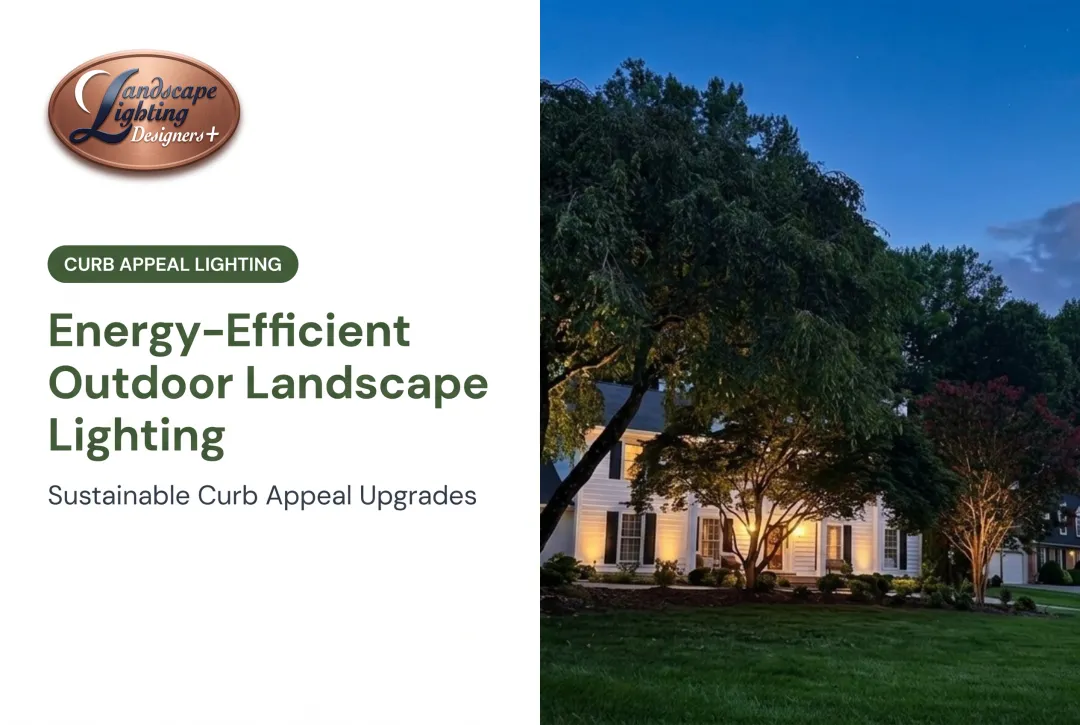
Because these fixtures sit high in the canopy and often run for long evening hours, LED technology supplies the efficiency the setup needs. Modern LEDs reach 150 lumens per watt or more while holding warm color output.
Best Trees for Moonlighting in the DC Metro Area
The right tree species can make or break a moonlighting installation. DC-area properties are fortunate to host many ideal candidates.
Mature Deciduous Trees: The Gold Standard
White oak (Quercus alba) is one of the best moonlighting trees for the region. University research documents heights of 80-100 feet and spreads near 80 feet—enough height for fixture mounting and a broad canopy for soft light diffusion.
Native to Maryland and Virginia, white oaks thrive in USDA zones 7a and 7b, matching the DC metro climate.
Red oak and other oak species share similar characteristics: strong branching structure, moderate canopy density, and mature heights that support 25-30 foot fixture placement.
Red maple (Acer rubrum) offers excellent moonlighting potential, reaching heights of 120 feet with 30-50 foot spreads. As a Maryland native, red maples are common throughout Bethesda, Chevy Chase, and surrounding neighborhoods. Their layered branching creates appealing shadow patterns.
American sycamore (Platanus occidentalis) brings massive scale: 75-100 feet tall and often equally wide. The University of Maryland notes it as a native common in low-lying riparian areas. That large canopy creates dramatic moonlighting, so each tree still needs a site-specific check before mounting fixtures.
Why Deciduous Trees Work Best
Deciduous trees create dappled patterns through layered branching. Even in winter, bare limbs cast intricate shadows that keep the effect interesting rather than flat.
Mature specimens with established canopies filter light best. They have the height and structure young trees simply do not.

Trees to Approach with Caution
Very dense evergreens often block too much light, preventing the soft downward glow that defines the technique. While not impossible to use, they require careful fixture positioning and higher output.
Young trees lack the necessary height (20+ feet minimum) and may not have the structural strength to support fixtures and wiring safely over time.
Palms (rare in the DC area) lack the branching structure that creates true moonlighting effects, though they can serve as elevated mounting points for other lighting applications.
Browsing finished work is the quickest way to narrow a direction; our project gallery has installations from across Bethesda, Potomac, and Chevy Chase.
Ideal Placement Locations for Your Property
Moonlighting works best when fixtures sit above the places you actually use after dark.
Primary Applications
Over patios and outdoor seating areas, moonlighting provides ambient dining and entertaining light that feels warm and inviting. The soft, diffused glow softens shadows on faces and still gives enough light for conversation and meals—without the glare of hard task lighting.
Along garden walkways, fixtures create a soft corridor of light. Guests feel guided overhead rather than herded between obvious path lights, and the dappled patterns add interest while improving safety and wayfinding.
Over pool and spa areas, moonlighting produces a shimmering reflective effect as filtered light dances on water surfaces. The elevated position keeps fixtures away from the pool itself while still delivering the illumination needed for nighttime swimming and entertaining.
DC-Area Architectural Applications
DC metro homes offer a few placement patterns that show up again and again:
Tree-lined driveways common on Bethesda and Potomac estates create natural moonlighting corridors. Mature oaks and maples flanking long approaches can be lit to cast welcoming light across the drive, so arrivals feel welcoming at scale without looking staged.
Georgetown courtyards in historic row houses benefit from moonlighting when mature trees overhang compact outdoor spaces. The technique maximizes limited square footage by using the tree canopy (vertical space) for lighting instead of filling scarce ground area with posts or fixtures.
Chevy Chase properties with mature landscaping can highlight specimen trees while simultaneously illuminating the spaces beneath them. A single well-positioned fixture in a large oak can light 400+ square feet below, making it one of the most efficient techniques for large properties.
The Key Principle: Think Tree and Space Together
Don't light a tree simply because it's beautiful. Light trees that overhang functional outdoor areas—places where people gather, walk, dine, or relax after dark. The best moonlighting serves both aesthetic and practical purposes, transforming the tree into both a focal point and a light source.

Moonlighting vs. Traditional Downlighting: Understanding the Difference
Both techniques aim light downward, but one creates focused task pools and the other a soft ambient wash.
Traditional Downlighting Defined
Traditional downlighting mounts fixtures on eaves, pergolas, or lower tree positions (typically 8-15 feet high) and aims them downward for focused, task-oriented illumination. It's ideal for:
- Dining tables where you need to see food clearly
- Outdoor kitchens and grilling areas
- Pathways requiring consistent, even coverage
- Architectural features you want to highlight dramatically
The light creates defined pools of brightness. You know exactly where the illumination starts and stops.
Moonlighting's Purpose
Moonlighting prioritizes soft ambient atmosphere over focused beams. Light filters through the canopy and spreads as a diffused wash, creating mood and general visibility rather than task-specific brightness. It works especially well for:
- Patios and seating areas where you want conversation-friendly glow
- Lawns and garden rooms that should feel open, not spotlighted
- Mature trees where branch shadows add natural texture
- Whole-yard ambiance that still leaves room for darker, quieter corners
Why the Best Designs Use Both Techniques Together
Strong landscape lighting designs layer multiple techniques for depth and function:
- Uplight the trunk to establish the tree as a focal point and show its structure
- Moonlight from the canopy to wash the space beneath in soft, natural-feeling light
- Downlight from structures to handle task lighting where you actually need it
This combination creates depth that neither technique achieves alone.
Uplighting draws the eye upward and sets the tree's presence. Moonlighting brings the eye back down with a gentle ambient glow. Traditional downlighting fills in focused light for dining, cooking, or walking.
Used together, each source has a job: structure, atmosphere, and task light—so the yard reads clearly without looking overlit.

Why Professional Moonlighting Installation Matters
Moonlighting looks effortless when done correctly. Getting there requires specialized expertise, equipment, and attention to detail that DIY approaches rarely achieve.
Working Safely at 20-30 Feet
Installing fixtures at elevation requires specialized equipment and safety protocols. OSHA regulations require self-supporting portable ladders to support at least four times their maximum intended load, with nonconductive side rails where the ladder could contact electrical equipment.
Professional installers maintain the equipment, training, and insurance needed to work safely at these heights. They also choose branch positions for lighting effect and long-term stability. A branch that looks sturdy may not hold weight reliably as it grows, and judging structural soundness takes arboricultural knowledge.
Tree-Safe Mounting, Wiring, and Fixture Durability
Non-invasive mounting protects long-term tree health. University of Kentucky plant pathology research identifies wounds as primary entry points for wood-decay pathogens. Drilling holes or driving nails into bark creates disease pathways that weaken trees over time.
Professional installers use brackets that strap around branches without penetrating bark. FX Luminaire offers tree-specific mounting systems built to hold fixtures securely while allowing growth. Strong installations also follow a few non-negotiables:
- Route wire with protective clips instead of tight wraps that girdle bark
- Use weatherproof enclosures that will not trap moisture against the tree
- Leave room for expansion and plan adjustment intervals as limbs thicken
- Size wire for voltage drop on longer runs to elevated fixtures
At 25 feet up, replacing a failed light is far more complex than swapping one at ground level. Kichler's brass landscape fixtures are built for corrosion resistance in harsh environments, and the FX JB uses die-cast A380 aluminum with stainless-steel hardware.
Those commercial-grade builds handle decades of wind, rain, UV, and DC-area weather: hot, humid summers and freezing winters. Budget fixtures may be fine near the ground. Canopy work needs reliability you do not want to revisit from a ladder every few seasons.
Running low-voltage cable from the transformer into the canopy without visible lines takes planning. Pros route wire up trunks and along branches, placing clips so seasonal foliage hides them. Done well, you see the glow—not the hardware.

Landscape Lighting Designers Plus: Expertise in DC-Area Moonlighting
Craig Collins brings 21 years of specialized experience to every moonlighting project. Unlike companies that hand designs to project managers, Craig personally designs each installation on-site after dark, testing fixture heights and angles before final placement. That hands-on process aims for the intended effect instead of a generic template.
His DC-area work spans historic Georgetown properties, Federal-style townhomes, and estates throughout Bethesda and Potomac, each with different trees, architecture, and outdoor rooms. An exclusive low-voltage focus (never 120V house-mounted fixtures) keeps systems safe, efficient, and in balance with the landscape rather than overpowering it.
Customers often call out the follow-through. Brent L. reported that Craig "came back several times to reposition lights until he got the best presentation," and Sarah S. appreciated that he addressed concerns about excessive brightness. Regional experience, tree-aware mounting, and a willingness to refine aim after dark are what separate a lasting moonlighting system from a one-night guess.
And if you would rather judge the effect on your own property before committing, we can show you your home at night.
Frequently Asked Questions
Is moonlighting landscape lighting legal?
Moonlighting is legal in residential applications across the DC metro area. Homeowners should verify any HOA restrictions on tree-mounted fixtures and ensure installations comply with local low-voltage electrical codes, which vary between DC, Montgomery County, and Virginia jurisdictions.
What are the rules of thumb for moonlighting landscape lighting?
Mount fixtures 20-30 feet high in mature trees with moderate canopy density. Use wide beam angles (40-60 degrees) and warm white LEDs (2700K-3000K). Ensure fixtures are concealed within the canopy when viewed from ground level.
How do you know if moonlighting is right for your property?
Moonlighting works best with mature trees (20+ feet) near patios, pools, or walkways. Choose it when you want soft ambient light, not focused task lighting. A consultation can confirm whether your trees and layout are a fit.
What types of trees work best for moonlighting in the DC area?
Mature deciduous trees like white oak, red oak, red maple, and American sycamore with spreading canopies work best. These species are common in established neighborhoods throughout Bethesda, Potomac, Chevy Chase, and surrounding communities.
How much does professional moonlighting installation cost?
Costs vary with tree height, fixture count, property access, and overall scope. For pricing tailored to your property, schedule a complimentary consultation with Landscape Lighting Designers Plus.
Does moonlighting harm trees?
Professional installation using non-invasive strap mounting systems does not harm trees. DIY methods using staples, nails, or screws can injure bark and create disease entry points. Professionals also account for tree growth over time, adjusting fixtures and wiring as branches expand.
Installed at the right height with tree-safe mounting, moonlighting gives Bethesda, Potomac, Chevy Chase, and greater DC metro homes soft, dappled light that feels natural after dark.
Ready to see it on your property? Contact Landscape Lighting Designers Plus at (888) 582-8845 or email contact@landscapelightingnow.com for a complimentary consultation.