Introduction
Picture this: you're standing outside your Bethesda or Chevy Chase home at dusk, admiring the architectural details that sold you on the property—the brick facade, the prominent gables, the columned entry. You invested in exterior lighting, yet the effect falls flat. The roofline glows, but the home beneath stays shadowy—and the curb appeal you expected never quite shows up.
You're not alone. Many DC-area homeowners get that same disconnect when they rely on recessed soffit lighting alone.
Recessed soffit lighting mounts in the roof eaves and shines downward. Uplighting sits at ground level and projects light upward. The two approaches differ in visual effect, installation, and cost.
This guide compares both on visual impact, installation, cost, maintenance, and fit for the Colonial, Federal, and Victorian homes common across the DC metro area.
Key Takeaways
- Recessed soffit lighting mounts in roof eaves for functional downlighting of entries and walkways
- Uplighting excels at dramatic architectural emphasis, revealing texture on brick and stone facades
- Soffit-only designs risk bright rooflines with dark facades (the "jellyfish effect")
- Easier retrofitting and post-install flexibility favor uplighting over fixed soffit fixtures
- Most professionally designed systems layer both: soffit lighting for function, uplighting for curb appeal
Recessed Soffit Lighting vs Uplighting: Quick Comparison
Use this side-by-side view to weigh cost, flexibility, and the look each approach creates on your home.
| Factor | Recessed Soffit Lighting | Uplighting |
|---|---|---|
| Cost | Higher for retrofits (attic/soffit access, enclosed wiring); lower when prewired in new builds | Lower for retrofits; low-voltage cable runs through the landscape |
| Placement | Fixed in the soffit; not adjustable after install; needs overhangs | Flexible ground placement; easy to reposition; works on any facade |
| Visual Effect | Downward light pools; upper facade can stay dark; risk of harsh spots | Upward wash that emphasizes height, texture, and scale |
| Best Use | Entryways, garage doors, covered porches, walkways, task lighting | Brick or stone facades, columns, gables, chimneys, architectural emphasis |
| Maintenance | Protected from ground debris; harder to reach for bulb changes | More exposed to landscaping; easier to clean and adjust |
| Coverage | First-floor facade and areas below the soffit only | Full facade from foundation to roofline, including gables |

What is Recessed Soffit Lighting?
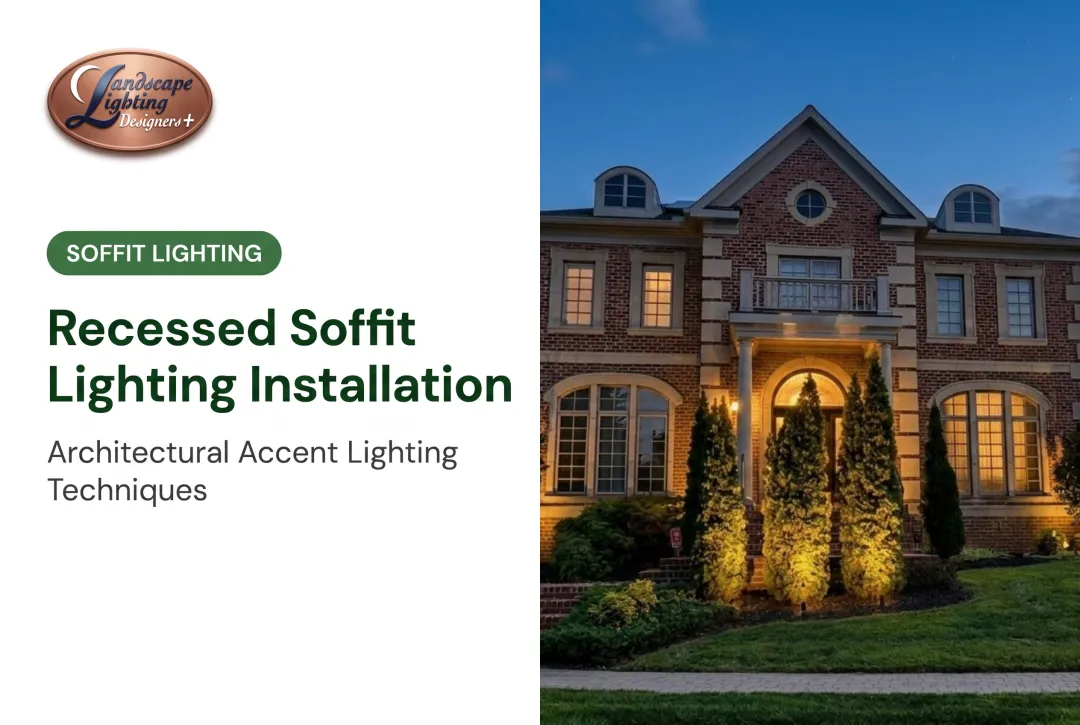
Recessed soffit lighting uses fixtures installed flush or surface-mounted into the underside of roof eaves (soffits). They direct light downward onto the facade, entryways, and walkways below. Canless LED downlights such as the HALO HLB series are commonly listed for wet locations, including covered outdoor spaces.
Why it's popular: Soffit lighting provides functional illumination for safety and visibility around entries and garage doors. It's often included in new construction packages because the wiring can be installed during framing.
Common problems when used alone:
- Creates harsh bright spots on lower facades while leaving upper stories and gables dark
- Produces what some call the "jellyfish effect," a glowing roofline with a shadowy home beneath
- Fails to reveal texture on brick or stone because fixtures sit too close (2-3 inches) to walls
Color temperature matters: Many soffit fixtures come with cool-white LEDs (4000K-5000K) that look unnatural on traditional brick and stone homes. DarkSky defines 2700K-3000K as warm white and 4000K+ as cool white. Dimming to 30-50% brightness and choosing warmer color temperatures (2700K-3000K) improves appearance.
Best applications for DC-area homes:
- Entryway illumination on Colonial and Federal-style homes
- Garage lighting for safety and visibility
- Covered porch task lighting
- Supplemental downlighting to complement uplighting systems
Limitations of Soffit Lighting for Architectural Emphasis
Those limits come from fixed placement. Soffit fixtures only throw light down from the eave line, so dormers, gables, and upper-story details stay dark unless you add other sources. At 2-3 inches from the wall, they also cannot graze brick or stone the way a fixture set 12-24 inches out at a low angle can.
After install, you lose flexibility too. Cans cannot move to refine the effect or follow landscape changes; you are locked into the original layout. On DC-area Colonials, Federals, and homes with strong gable lines, soffit downlights work best as a supplement to ground-level uplighting—not as the only light on the facade.

What is Uplighting?
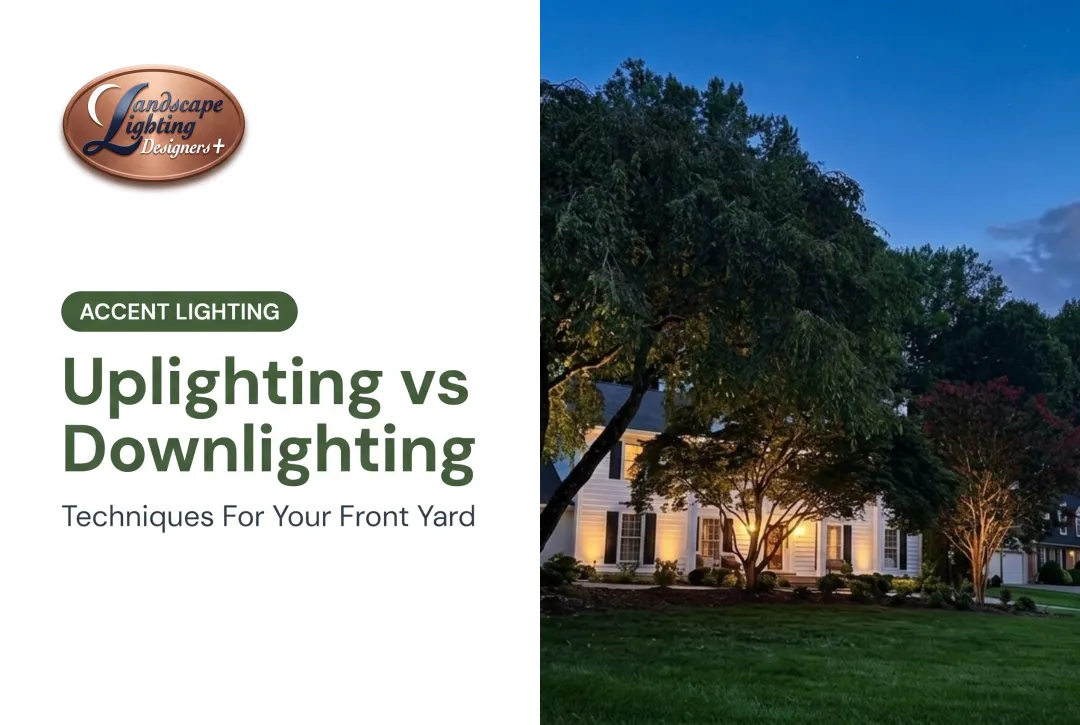
Uplighting uses low-voltage landscape lighting fixtures placed at ground level. In-ground well lights, bullet spotlights, and adjustable fixtures project light upward onto building facades, columns, trees, and architectural features.
Why uplighting looks striking: Natural light comes from above, so light aimed upward feels unnatural and more eye-catching (Journal of Vision). That pulls attention up the facade and emphasizes building scale. Kichler describes uplighting as dramatic and focal, with shadow patterns downlighting cannot match.
Grazing technique for texture: WAC's technical guidance sets a maximum 12-inch wall offset for landscape grazing. Fixtures placed 12-24 inches from textured surfaces (brick, stone, stucco) cast deep shadows and highlights that reveal depth and craftsmanship—something soffit lights mounted inches from the wall cannot do.
Design flexibility advantages:
- Fixtures can be repositioned, angled, and adjusted after installation
- Easy to add, remove, or modify as landscaping matures or preferences change
- No attic or soffit access required for installation or maintenance
Low-voltage safety and efficiency: Most uplighting systems run on 12V or 15V power, covered under NEC Article 411 for low-voltage lighting. UL 1838 covers low-voltage landscape lighting systems. LED fixtures often draw just 2-12 watts, so energy use stays low.

Use Cases for Uplighting
Uplighting works especially well where soffit lighting falls short:
Brick and stone facades: Common in Bethesda, Potomac, and Chevy Chase neighborhoods, textured masonry benefits most from uplighting positioned to reveal mortar lines and architectural detail.
Federal-style and Victorian townhomes: In Georgetown, Capitol Hill, and Cleveland Park, uplighting emphasizes columns, cornices, window trim, and gables that define these architectural styles.
Gable illumination: Upward-directed light washes the triangular peaks between roof pitches—areas soffit lighting physically cannot reach.
Garage facades: Core-drilled in-ground well lights installed in driveways provide clean, trip-free uplighting for garage doors and brick or stone garage facades.
Photographs settle this faster than descriptions—our lighting project gallery shows how these effects look after dark on finished homes.
Recessed Soffit Lighting vs Uplighting: Which Is Better for Your Home?
Neither is universally "better." The right choice depends on your goals, home architecture, installation timing, and budget.
Choose recessed soffit lighting if:
- You're building new construction or renovating and can prewire economically
- You need functional task lighting for entries, walkways, and covered porches
- Your home has minimal gables or architectural texture to highlight
- You want clean, ceiling-line downlight as a base layer around the home
Choose uplighting if:
- You want dramatic curb appeal and architectural emphasis
- Your home has brick, stone, or textured facades
- You have prominent gables, columns, or upper-story details
- You're retrofitting an existing home and want lower installation costs
- You value design flexibility and easy adjustments
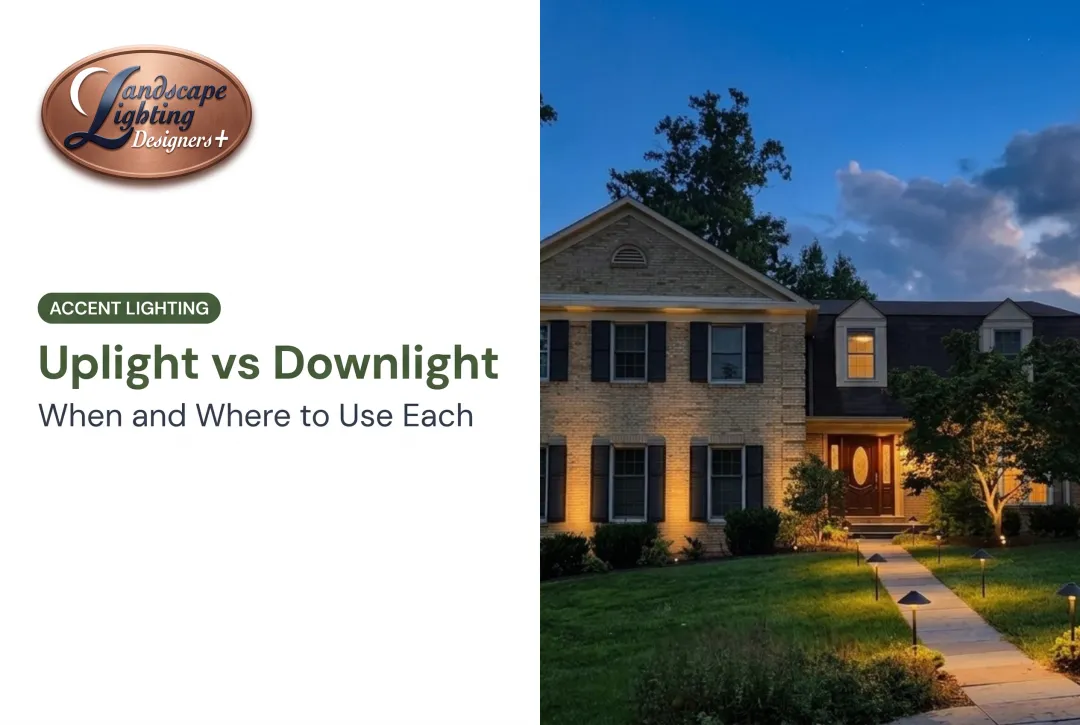
Best practice for most homes: Combine both techniques. Use soffit lighting for functional downlight at entries and walkways, and uplighting for drama, texture, and gable emphasis. Layered exterior lighting adds depth and dimension when the two work together.
DC-area architectural considerations: Many historic and traditional homes in the region—Federal townhomes, Colonial revivals, Victorian properties—benefit most from uplighting that reveals craftsmanship and period details.
Modern and contemporary homes often suit minimalist soffit lighting or a balanced blend of both.
Real-World Example: Uplighting a Federal-Style Home in Chevy Chase
A Chevy Chase homeowner with a Federal-style brick home wanted to enhance curb appeal and highlight the home's columned entryway, brick facade texture, and prominent front gables. The home lacked significant roof overhangs, making soffit lighting impractical and leaving the upper facade completely dark at night.
The solution: Craig Collins of Landscape Lighting Designers Plus designed a low-voltage uplighting system using bullet spotlights positioned 18 inches from the brick facade to create a grazing effect. Additional fixtures aimed at the columns and gables lit the architecture from foundation to roofline: coverage soffit lighting could not deliver with the home's limited eaves.
The outcome: Warm 2700K LED uplighting changed how the home reads after dark:
- Revealed brick texture across the facade
- Emphasized the columned entry
- Washed the front gables with light
- Runs about $8 per month in energy costs
Neighbors noticed the difference, and the homeowner reported a stronger curb-appeal presence at night.

If you're considering uplighting or soffit lighting for your DC-area home, Landscape Lighting Designers Plus offers complimentary design consultations to evaluate your architecture and recommend the best approach. Contact Craig Collins at (888) 582-8845 or contact@landscapelightingnow.com.
Conclusion
Recessed soffit lighting works best for functional task lighting and new construction projects where wiring can be installed economically. Uplighting excels at dramatic architectural emphasis, texture highlighting, and flexible design for retrofits.
Match the approach to the house:
- Uplighting for Federal townhomes, brick facades, and strong gables that need full-facade texture
- Soffit lighting for ranch-style homes with deep eaves when entry and walkway coverage matter most
- Both layered together when you want architectural drama plus clear task light at doors and paths
Weigh architecture, goals, and budget. For most DC-area homes with historic or traditional character, uplighting—alone or layered with soffit lighting—gives the textured, full-facade glow these properties need after dark.
To evaluate the design on your own house rather than someone else's, we can show you your home at night before any work begins.
Frequently Asked Questions
Are soffit lights a good idea?
Soffit lights work well for task lighting at entryways, garage doors, and covered porches. Alone, they rarely deliver dramatic architectural lighting. Pair them with uplighting to avoid the "jellyfish effect" and cover the facade from foundation to roofline.
When should I use uplighting?
Use uplighting to emphasize building height, highlight textured facades (brick, stone, stucco), and light gables or upper-story details. It also works well for flexible, lower-cost retrofits. Uplighting suits Federal, Colonial, and Victorian homes common throughout the DC metro area.
Where should I place uplighting on my house?
Place fixtures 12-24 inches from textured facades to graze brick or stone and reveal texture. Aim lights at the base of columns, gables, and dormers. For garage facades, core-drilled in-ground well lights in the driveway keep paths clean and trip-free.
Can I use both soffit lighting and uplighting together?
Yes. Combining both techniques often produces the best result: use soffit lighting for functional downlighting at entries and walkways, and uplighting for architectural drama, texture emphasis, and gable illumination. This layered approach provides both safety and curb appeal.
What color temperature is best for exterior home lighting?
2700K-3000K warm white works best for most traditional DC-area exteriors, especially brick, stone, and wood. Avoid cool white (4000K-5000K) on traditional architecture. It looks harsh and unnatural. Warm white flatters period details and feels more welcoming at night.
How much does it cost to add uplighting to an existing home?
Uplighting retrofits usually cost less than recessed soffit lighting. Low-voltage cable runs through landscape beds, so you avoid attic or soffit access. Final cost depends on fixture count, cable runs, and site conditions. Call Landscape Lighting Designers Plus at (888) 582-8845 for a complimentary estimate tailored to your DC-area home.