Many DC metro homeowners overlook their property's nighttime potential, missing opportunities to enhance curb appeal, improve safety, and extend outdoor living hours into spring and fall evenings. Your home's best features—those mature oaks in Bethesda, the Federal-style columns in Georgetown, the specimen plantings in Potomac—simply vanish after sunset without intentional illumination.
This guide covers what LED uplighting is, why it matters for DC metro properties, common residential applications, and the design principles that separate elegant outdoor lighting from harsh overlighting.
Key Takeaways
- Ground-level LED fixtures light trees, architecture, and landscape features from below for depth after dark
- Well-planned uplighting boosts curb appeal, extends outdoor living hours, and improves safety without glare
- Best used for mature trees, facade washes, garden accents, and soft ambient outdoor light
- Beam angle, placement, color temperature, and restraint matter more than fixture count
What is LED Uplighting?
LED uplighting is a landscape lighting technique where fixtures at ground level direct light upward onto vertical surfaces, trees, or architectural features. It builds height and depth that other outdoor lighting methods do not.
How it compares to related techniques:
- Uplighting: ground-level fixtures cast light up onto trees, walls, and facades
- Downlighting: fixtures on eaves or in tree canopies cast light downward
- Path lighting: horizontal ground-level light for walkways and steps
LED uplighting uses energy-efficient LED fixtures on safe low-voltage systems, typically 12 volts. A landscape transformer steps your home's 120V supply down to about 12V—safer and more efficient than older halogen or 120V house-mounted lights.
For DC metro homeowners, that low-voltage setup is easier to expand, simpler to hide in established garden beds, and gentler on the mature landscapes common in Bethesda, Potomac, and Chevy Chase.

Why Uplighting Transforms Outdoor Spaces
Enhances Curb Appeal and Nighttime Aesthetics
Uplighting adds visual interest and depth that helps properties stand out after dark. According to the National Association of Realtors, outdoor lighting contributes style, ambiance, safety, and "serious curb appeal" to residential properties.
Well-placed fixtures highlight strong architectural features (columns, brick or stone facades, decorative trim) and pull the eye away from weaker ones. The nighttime view reads as intentional: architecture and landscape work together instead of disappearing into the dark.
Extends Usability of Outdoor Spaces
Ambient uplighting makes patios, gardens, and outdoor entertaining areas comfortable after sunset. For DC metro homeowners who want more use from spring and fall evenings, that soft background layer turns daytime outdoor space into a place people actually stay.
Paired with path and task lighting, it supports conversation, dining, and movement without harsh glare.
Improves Safety and Security
Consistent ambient coverage improves visibility around perimeters, entries, and pathways. While research from the International Dark-Sky Association notes that increased outdoor lighting has not clearly been shown to deter crime, well-lit properties do help residents and guests orient themselves outdoors.
The National Crime Prevention Council recommends illuminating potential hiding places such as gaps between trees or shrubs, stairwells, and entries. Uplighting naturally contributes ambient coverage in those spots.
Energy Efficiency and Long-Term Savings
LED uplighting systems use up to 70% less electricity than comparable halogen systems, and low-voltage setups run at 12V rather than 120V. That combination cuts energy use and keeps installation safer for residential work.
For a typical 20-fixture home system, the difference looks like this:
- About 200 watts with LED versus 1,000–2,000 watts with halogen
- Bulb life rated around 25,000–50,000 hours
- Lower monthly utility costs and far fewer replacements over the system's life

For visual reference, our portfolio of completed projects applies these techniques to DC-area houses of very different styles.
Common Applications for Landscape Uplighting
Illuminating Mature Trees and Specimen Plants
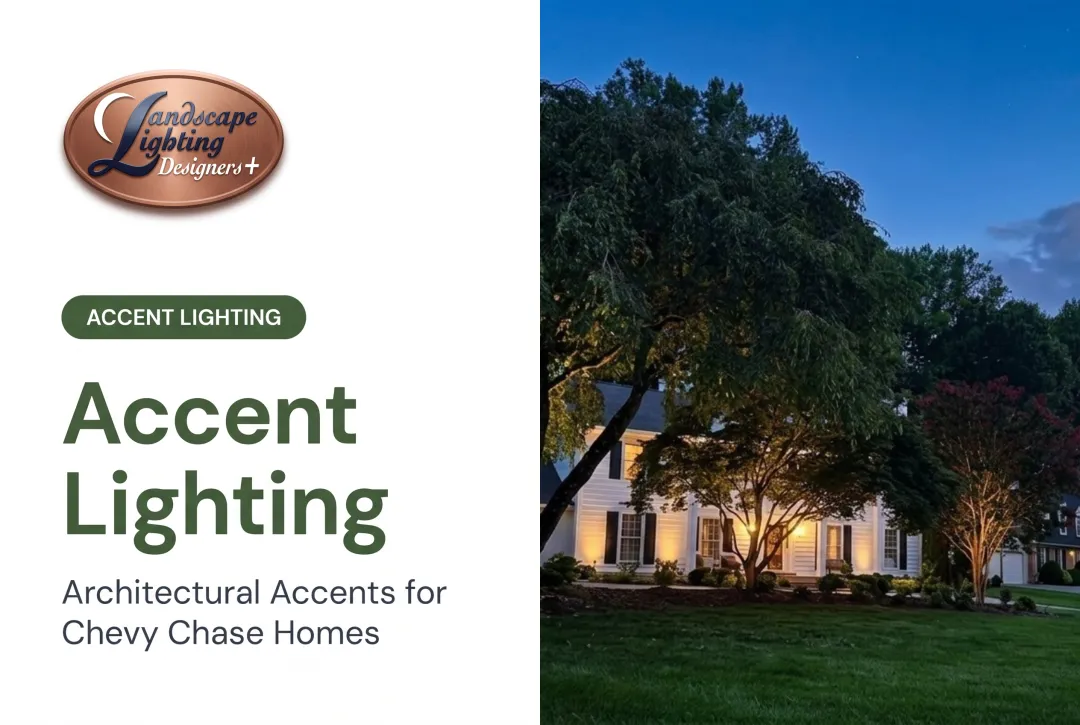
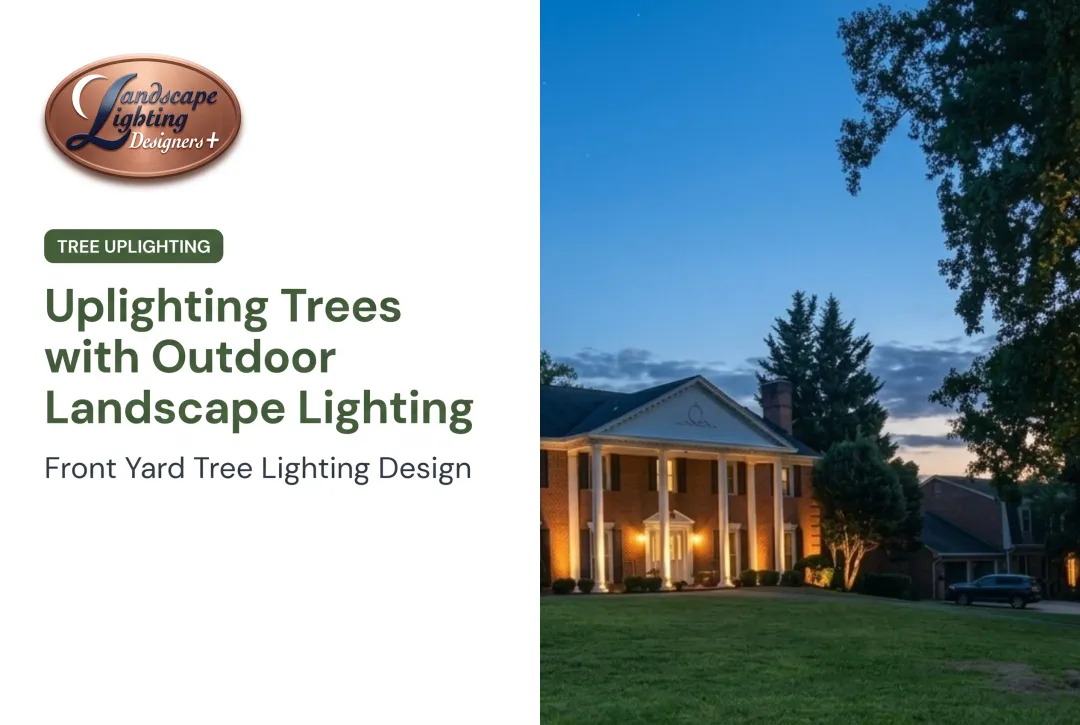
Uplighting showcases trunk texture, branch structure, and canopy form. Match beam angle and placement to the tree:
- Narrow 10-15° beams from the base emphasize vertical trunks on tall trees with concentrated canopies
- Two 35° fixtures as cross-lights beat a single wide beam on fuller deciduous canopies
- 60° beams set farther from the base suit broad conifers when aimed onto the tree, not straight up through the canopy
In Bethesda, Potomac, and Chevy Chase, mature oaks, maples, and magnolias are common. Choose beam angles and fixture spots based on tree height, canopy width, and branch obstructions.
Highlighting Home Architecture and Facades
Uplighting accentuates details on Federal-style townhomes, Victorian homes, and historic residences across the DC metro area:
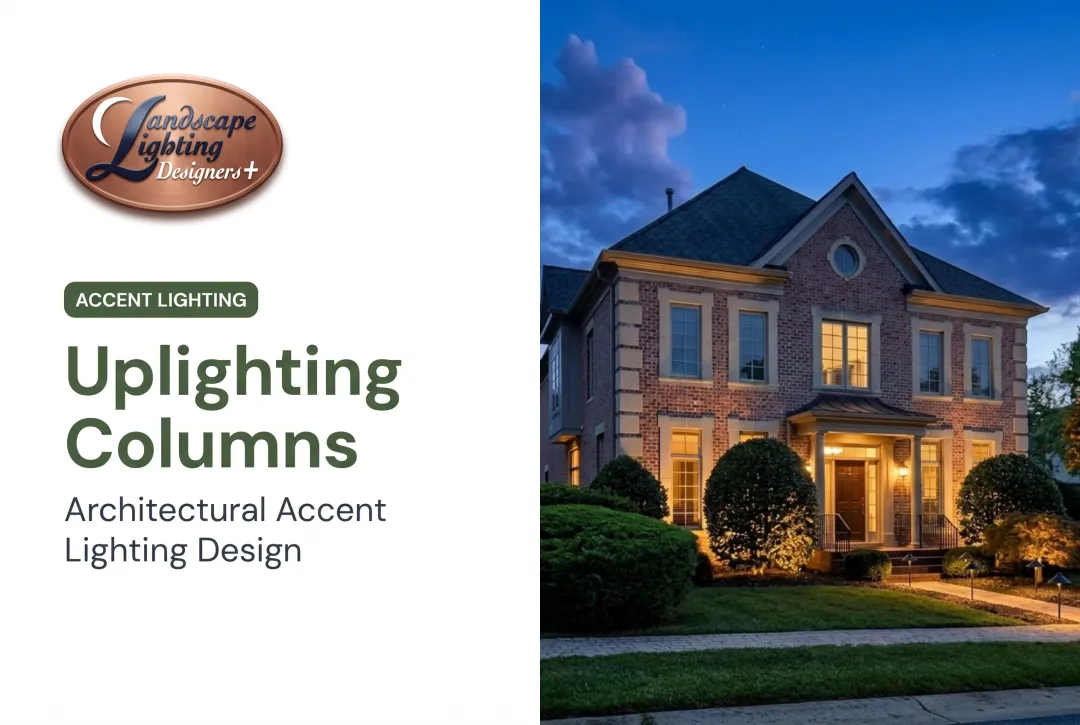
- Position fixtures at the base of columns for upward shadow patterns that stress craftsmanship
- Direct light onto brick or stone facades to reveal texture and depth
- Graze decorative trim and vertical elements so lit surfaces contrast with recessed shadows
These moves pull out design details that flat overhead lighting washes out.
Accentuating Gardens and Landscape Features
Uplighting reveals flower beds, ornamental grasses, shrubs, and garden sculptures after dark. Color temperature matters: warm 2700K tones complement red and green foliage as well as natural wood and stone, while cooler 3000K suits blue or silver foliage. Use the same idea on water features, garden walls, and outdoor art: match color temperature and beam angle to size, color, and reflectivity instead of one setting for everything.

Creating Ambient Outdoor Living Spaces
Uplighting around patios, decks, and outdoor entertaining areas creates soft, indirect light without harsh glare. Use uplights for ambient background, path fixtures for wayfinding, and task lights for grilling or dining. That layered setup supports several activities without overlighting any one zone.
Design Considerations for Effective Uplighting
Choosing the Right Beam Angle
Beam angle determines the spread of light and should match the width and height of the illuminated object. Narrow 10-15° beams suit tall tree canopies or architectural peaks; medium 35° beams are a versatile starting point for concentrated canopy lighting; wide 60° beams cover broad coniferous trees or expansive facades.
Beam diameter also grows with distance from fixture to target. A 35° beam aimed at a tree 15 feet away creates a much wider pool of light than the same fixture placed 5 feet from the trunk.
Beam angle selection guide:
- 10-15°: Tall, thin trunks; distant or high focal points; narrow architectural elements
- 35°: Concentrated canopy lighting; cross-lighting deciduous trees; medium-width facades
- 60°+: Broad conifers; wide facades; situations requiring two-sided coverage from a single fixture

Selecting Appropriate Lumen Output and Color Temperature
Match lumen output to the size and reflectivity of the illuminated surface. A small ornamental tree 8 feet tall requires far less output than a mature 60-foot oak. Light-colored stone reflects more efficiently than dark brick, meaning a bright limestone column needs fewer lumens than a similar column in charcoal-gray brick. Adjustable fixtures with variable lumen output (VLO) offer flexibility as young trees grow or design needs change.
Color temperature creates distinct moods: 2700K warm white delivers an inviting glow for natural materials and traditional architecture, while 3000K provides brighter, crisper light suitable for contemporary designs or silver and blue foliage. For DC metro properties with traditional brick Colonial homes or Federal-style architecture, 2700K typically complements the warm tones of brick, stone, and wood trim.
Strategic Fixture Placement and Spacing
Position fixtures to avoid obstructions (branches, landscape features, hardscape edges) that create unwanted shadows or block the beam entirely. For trees, focus the beam into the canopy while grazing the trunk to reveal texture. Place fixtures closer to walls when you want to emphasize surface texture through grazing light; position them farther away for a broader wash with softer illumination.
Conceal fixtures within landscape beds, behind low shrubs, or using mounting accessories for tree trunks and columns. The goal is to see the effect of the light, not the fixture itself.
The Art of Balance: Avoiding Overlighting
Effective uplighting creates contrast between light and shadow, not uniform brightness across every surface. Overlighting flattens visual interest, erases the dimensional shadows that create depth, and leaves a harsh, unnatural look. Treat landscape lighting as an art form guided by subtlety and elegance rather than spectacle.
Select a few important features: a specimen tree, an architectural detail, a garden focal point. Light those thoughtfully and let other areas stay in gentle shadow. That contrast adds depth and draws the eye to your property's strongest elements.
Low-Voltage System Benefits
Low-voltage 12V landscape lighting systems are safer and more energy-efficient than 120V house-mounted alternatives, and they sit more naturally in outdoor environments. Installation is simpler too: wiring is easier to conceal in established beds, safer for homeowners to adjust, and less disruptive to mature landscapes. Quality low-voltage LED systems deliver clean, controlled light without the risks or visual bulk of line-voltage fixtures on home exteriors.
Working with a Landscape Lighting Designer
Professional design expertise helps homeowners assess property features, select the right fixtures and beam angles, and create balanced lighting plans that enhance rather than overwhelm.
Designers with credentials from the Association of Outdoor Lighting Professionals (such as CLVLT or COLD) know how to translate your goals into a cohesive system.
Landscape Lighting Designers Plus, serving the DC metro area for over 21 years, takes a designer-first approach. Craig Collins personally designs each project, with no project managers or sales reps involved. This hands-on method ensures artistic integrity and site-specific customization tailored to your property's architecture, mature trees, and unique landscape features.
What to expect from a professional consultation:
- Property assessment identifying key features and opportunities
- Discussion of your goals, aesthetics, and functional needs
- Customized lighting plan with fixture recommendations and placement
- Ongoing support as landscapes mature and lighting needs evolve
The value extends beyond the initial installation: experienced designers return to adjust fixtures as trees grow, reposition lights to optimize presentation, and expand systems as outdoor living areas evolve.
And if you would rather judge the effect on your own property before committing, we can show you your home at night.
Frequently Asked Questions
What does uplighting mean?
Uplighting is a lighting technique where fixtures positioned at ground level direct light upward to illuminate trees, architectural features, or other vertical surfaces, creating depth and visual interest in nighttime landscapes.
How do you use uplighting?
Place LED fixtures at the base of trees, walls, columns, or landscape features and aim them upward to highlight texture, form, and architectural details. Combine uplighting with path and task lighting for a complete system.
What are some examples of uplighting?
Common residential examples include illuminating mature oak or maple trees, highlighting brick or stone home facades, accentuating garden sculptures or ornamental grasses, and washing property perimeter walls or fences with soft upward light.
What's the difference between uplighting and downlighting?
Uplighting directs light upward from ground-level fixtures, while downlighting directs light downward from elevated positions such as eaves or tree canopies. Effective landscape lighting often combines both techniques to create layered illumination.
How much does landscape uplighting cost?
Professional landscape uplighting costs vary by property size, fixture count, system complexity, and component quality. Request a site-specific consultation and itemized proposal—DC metro pricing reflects local labor, permitting, and landscape conditions.
Can LED uplighting be used year-round in the DC area?
Yes. Quality LED landscape fixtures are built for year-round outdoor use, with weatherproof ratings and corrosion-resistant construction that handle the DC metro area's hot summers, cold winters, and variable precipitation.