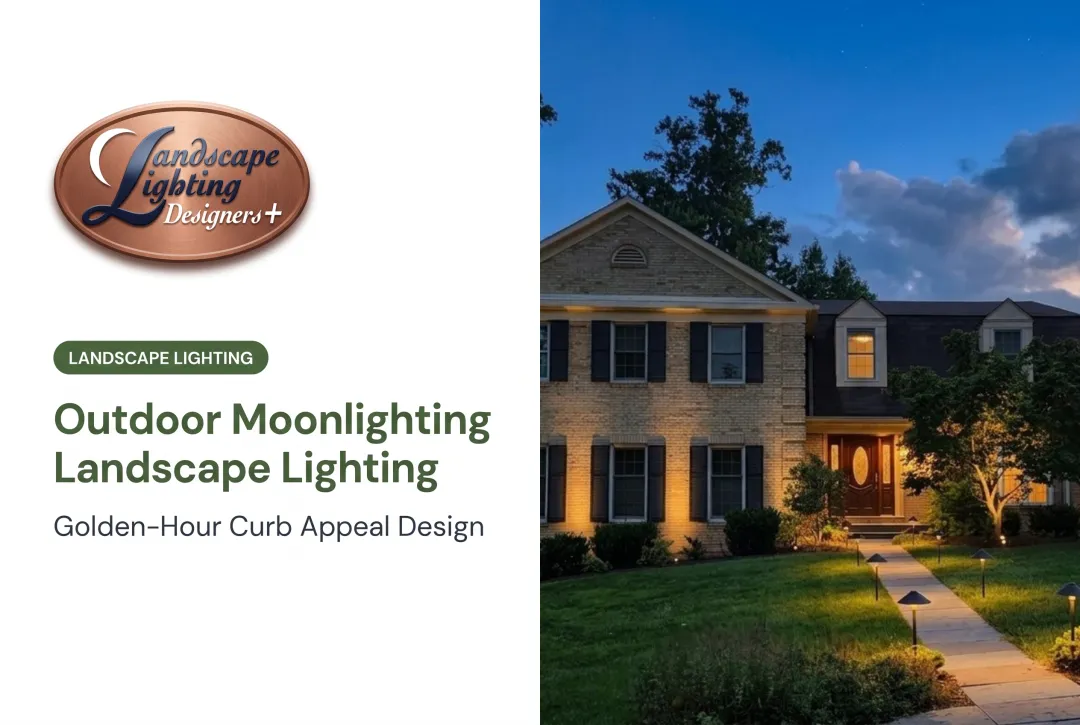
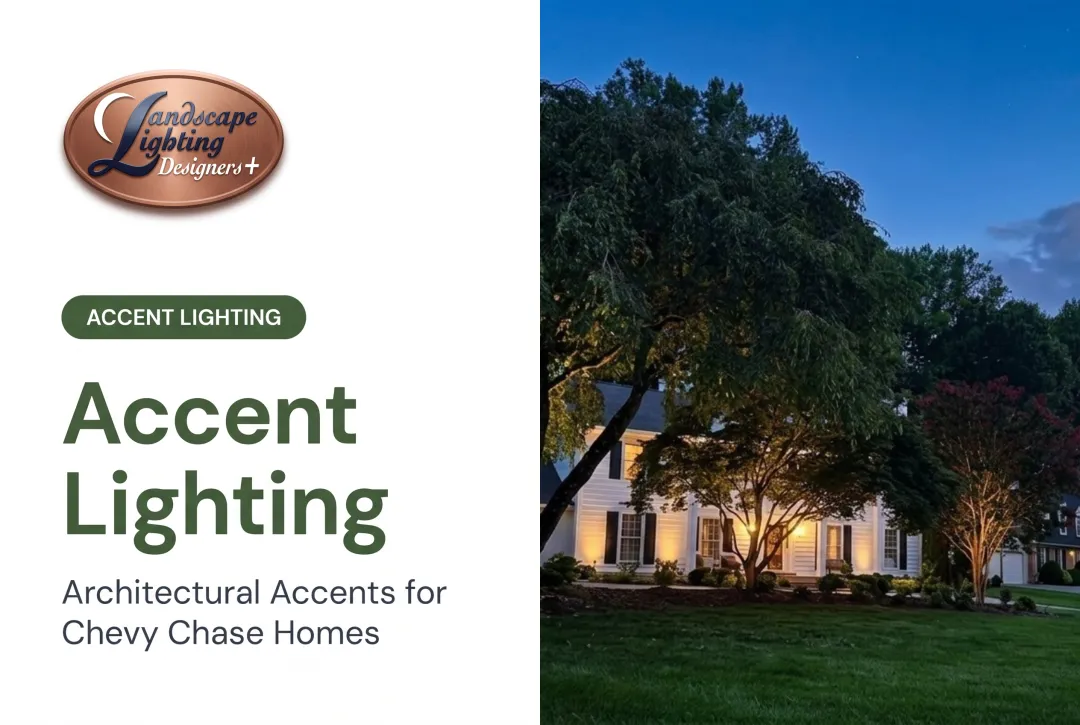
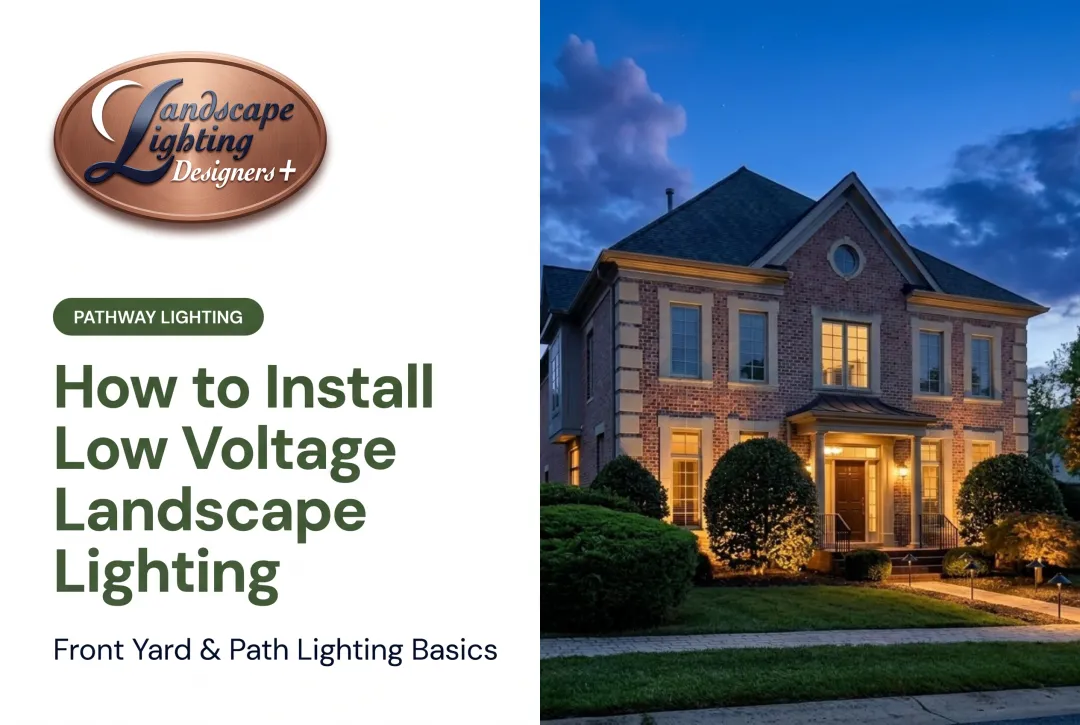
Moonlighting is a downlighting technique where LED fixtures are installed 15-40 feet high in mature trees or structures, creating soft, diffused light that filters through branches. For DC metro homeowners in Bethesda, Potomac, and Chevy Chase, this approach enhances nighttime beauty, improves pathway and driveway safety, delivers energy savings through low-voltage LED systems, and increases perceived property value—all while preserving the sophisticated, understated character these neighborhoods are known for.
Key Takeaways
- Fixtures mounted high in trees cast a soft, moonlight-like glow across the yard
- Ambient path and patio light improves nighttime safety without harsh spotlights
- Low-voltage LEDs use 80–90% less electricity than traditional halogen fixtures
- Soft nighttime ambiance boosts curb appeal and perceived property value
- Strongest results come from layering moon lighting with uplights, accents, and path lights
What Is Moonlighting in Landscape Lighting?
Moonlighting is a downlighting technique that places low-voltage LED fixtures 15–40 feet up in mature trees or tall structures so soft light filters down through branches and foliage. FX Luminaire calls it the original downlighting effect for that reason.
The key distinction from other outdoor lighting: fixtures stay hidden in the canopy, so the property reads as natural moonlight rather than obvious artificial light. As WAC Lighting notes, the result is a quiet downward wash across the landscape.
Visual Effects and Design Impact
Moonlighting creates:
- Dappled shadows that shift naturally when branches move in the breeze
- Gentle illumination of pathways, lawns, garden beds, and landscape features without harsh spotlighting
- Subtle architectural highlighting that emphasizes rooflines, columns, and entryways without overpowering them
- Depth and dimension in the nighttime landscape through layered light and shadow

That layered look is a big reason homeowners invest in professional landscape lighting. According to the 2024 Houzz Outdoor Trends Study, 78% of homeowners with outdoor-system projects upgraded outdoor lighting—and landscape lighting led the category at 81%.
For DC metro properties—especially in Bethesda, Potomac, and Chevy Chase—moonlighting fits mature tree canopies where owners want elegant nighttime curb appeal without theatrical brightness.
Benefits of Moonlighting for Your Property
Enhances Curb Appeal and Property Aesthetics
Moonlighting creates dramatic nighttime curb appeal by highlighting mature trees, architectural features, and landscape depth without harsh spotlighting. The technique produces a sophisticated, resort-like atmosphere for outdoor entertaining spaces, pools, and gardens.
Kichler Lighting characterizes downlighting as subtle and capable of creating an inviting outdoor living space, while WAC emphasizes its gentle, comforting radiance. Layered with accent lighting, moonlighting adds soft ambient light while accents pull focus to key features—so patios, pools, and gardens stay usable after dark without looking over-lit.
In neighborhoods like Bethesda, Potomac, and Chevy Chase, designers often pair canopy moonlighting with light path lighting so the property keeps its natural character while the facade and trees read clearly from the street.

Improves Safety and Security
Downward-casting moonlight provides consistent ambient illumination for pathways, driveways, steps, and outdoor living areas. FX Luminaire notes that path lights help pedestrians navigate and draw attention to grade changes and steps, reducing trip hazards.
Better visibility also supports passive security: people can see walkways and entry points, and dark corners are harder to use as cover. A 2008 Campbell Collaboration review found 21% lower crime in public areas with improved street lighting. That research covers streets and public spaces, not private yards, but the same ideas—clear sight lines and fewer hiding spots—help explain why homeowners use soft ambient light around paths and doors.
Energy Efficiency and Cost Savings
Low-voltage LED systems deliver clear advantages over traditional 120V outdoor lighting:
- Up to 90% more efficient than incandescent bulbs, per ENERGY STAR
- 80-90% less electricity than halogen landscape systems, often only a few dollars per month to run
- Cooler output than old incandescent lamps, which is easier on nearby plantings and finishes
- 30,000-50,000-hour ratings on professional-grade LED fixtures, so fewer ladder trips and replacements
A fixture like WAC's Tree Light draws about 7.5 watts for roughly 380 lumens at 12V. Your bill still depends on how many fixtures you run and local rates, but the gap versus older halogen systems is easy to see on a monthly statement.
Increases Perceived Property Value
Professional landscape lighting has strong buyer appeal. According to NAHB's April 2024 analysis of more than 3,000 recent and prospective buyers, 82% rated exterior lighting essential or desirable. This broad preference reflects buyer interest in professionally designed outdoor lighting, though no verified percentage increase in home value or return on investment specific to moonlighting was found.
On higher-end DC metro listings in places like Bethesda and Potomac, that preference shows up as night photos and evening showings where mature trees and architecture stay visible—helping a home feel finished after dark, even without a published moonlighting-only ROI figure.
How Moonlighting Works: Technical Overview
Moonlighting uses low-voltage directional fixtures specifically designed for tree mounting and elevated installations. Common equipment includes:
- Low-voltage LED bullet lights operating at 12V
- Directional spotlights with adjustable beams
- Tree-mounted fixtures with specialized mounting hardware
Typical specifications vary by manufacturer and application. For example, WAC's Tree Light produces 380 lumens and offers beam angles of 35, 45, and 55 degrees at 2700K, 3000K, or 4000K color temperature. FX Luminaire's MR-11 lamps produce 220-270 lumens with 30- or 60-degree beams at 2700K or 3000K.
Installation Process
Professional installation typically follows four steps:
- Secure fixtures with standoff screws or branch-mounted brackets, and leave extra wire for growth. Kichler recommends placing downlights at least 4 feet above the lowest branch tier, ideally 20-25 feet above grade.
- Use mounting methods that will not girdle the tree. NDSU warns that wires, straps, or cables left around stems eventually cut into growing wood, so hardware needs periodic review.
- Run low-voltage wiring down the trunk, then bury it or hide it within landscape features for a clean look.
- Install a centralized transformer near the home's electrical service or another weather-protected spot to convert 120V household current to safe 12V.
Light Distribution and Design Balance
Effective moonlighting requires careful attention to:
- Wider beams (30-60 degrees) for broader coverage; narrower beams for focused pools of light
- 200-400 lumens per fixture, adjusted for tree size, canopy density, and desired effect
- 2700K-3000K warm white to mimic natural moonlight and complement wood, stone, and foliage
- 2-4 fixtures per large tree, with multiple trees creating overlapping pools of light
Designers balance these choices to avoid over-lighting, keep shadows natural, and layer moonlighting with path, accent, and architectural light. Done well, the result is soft ambient coverage that reads like moonlight filtered through the canopy.

For visual reference, our portfolio of completed projects applies these techniques to DC-area houses of very different styles.
Design Considerations for Effective Moonlighting
Not every property is equally suited for moonlighting. The best candidates include:
- Large deciduous trees (oaks, maples) and evergreens (pines, firs) with full canopy coverage and sound branches that can hold fixture hardware
- Pergolas, covered patios, or other tall structures when mature trees aren't available
- Layouts where patios, pathways, and key features sit close enough for overhead light to matter
Seasonal Considerations
Deciduous trees create different effects throughout the year:
- Summer: Full leaf canopy produces dappled light with intricate shadow patterns as light filters through foliage
- Winter: Bare branches create stronger, more defined shadows with broader light distribution below
Evergreens stay more consistent year-round, though snow or ice can briefly change the pattern. Plan fixture aim and brightness for both full canopy and bare-branch conditions so the effect holds up in every season.
Local Regulations and Property-Specific Factors
DC metro municipalities may limit brightness, placement, or light trespass onto neighboring properties. Designers who know Bethesda, Potomac, Chevy Chase, and Rockville rules build compliance into the layout from the start.
Additional considerations include:
- Integration with existing landscape lighting
- Property boundaries and neighbor sight lines
- Tree health and growth patterns
- Underground utilities and irrigation systems
Moonlighting vs. Other Outdoor Lighting Techniques
Moonlighting works best as one layer in a full outdoor lighting plan. Here’s how it differs from the other core techniques:
| Technique | Light Direction | Primary Purpose | Best Applications |
|---|---|---|---|
| Moonlighting | Downward from elevation | Ambient illumination | Pathways, patios, lawns, general landscape coverage |
| Uplighting | Upward from ground level | Focal emphasis | Tree trunks, architectural facades, columns, specimen plants |
| Path lighting | Low-level, directional | Wayfinding and safety | Walkways, steps, driveways, grade changes |
| Spotlighting | Focused beam | Dramatic accent | Focal trees, shrubs, water features, art, entryways |
FX Luminaire recommends combining these fundamental effects rather than relying on one technique alone. A layered approach uses:
- Moonlighting as the ambient foundation for soft, area-wide coverage
- Uplighting on focal points such as specimen trees or architectural features
- Path lighting for safety along walkways, steps, and grade changes
- Spotlighting / accent lighting on garden beds, water features, and decorative elements
Used together, these layers give you soft overall light, clear routes, and a few strong focal points—without overlighting the property.

Getting Started with Professional Moonlighting
Professional moonlighting starts with a site visit and a clear plan—then moves through design, install, and light ongoing care.
Initial Consultation
A qualified landscape lighting designer visits your property to:
- Understand your goals (safety, entertaining, curb appeal, security)
- Assess mature trees, structures, and landscape features
- Discuss budget and project scope
- Address concerns like avoiding excessive brightness or preserving natural character
Custom Design
The designer creates a lighting plan tailored to your property, balancing:
- Moonlighting fixtures in appropriate trees or structures
- Complementary uplighting, path lighting, and accent fixtures
- Transformer capacity and wiring routes
- Seasonal effects and long-term tree growth
At Landscape Lighting Designers Plus, owner Craig Collins personally designs every project—no project managers or sales reps. With over 21 years across the DC metro area, his plans favor balance and subtlety over spectacle.
He works only with 12V landscape fixtures and never 120V house-mounted lights, which keeps installs safer, more efficient, and easier to expand later.
Installation and Timeline
Professional installation includes fixture mounting, wiring, transformer setup, and final adjustments. Timelines depend on scope: focused installs often finish within a week of signing; whole-property designs take longer.
Maintenance Requirements
Low-voltage LED systems require minimal maintenance:
- Annual tune-ups to reposition fixtures as trees grow
- Bulb replacements every 30,000–50,000 hours (about 10–15+ years with typical nightly use)
- Seasonal adjustments for foliage changes or new landscape features
- System expansions as outdoor living areas evolve
A designer who knows low-voltage systems and tree growth will keep the light soft and even as the landscape changes—so the effect still reads as moonlight years later.
If you are still weighing options, a nighttime preview of your own home removes most of the guesswork.
Frequently Asked Questions
What does moonlighting mean?
In landscape lighting, moonlighting is a downlighting technique that mimics natural moonlight by placing fixtures high in trees.
What is an example of moonlighting?
Installing low-voltage LED fixtures 20-30 feet up in a mature oak tree in a Bethesda backyard to cast soft, dappled light onto a patio and garden below, creating natural-looking nighttime ambiance for outdoor entertaining.
How much does moonlighting installation cost?
According to HomeAdvisor, professional landscape lighting typically runs $1,000–$7,500, with many projects around $4,000. Tree-mounted moonlighting pricing depends on fixture count, tree height and access, wiring, and transformer needs—get a site assessment for an accurate quote.
Can moonlighting damage my trees?
Proper professional mounting does not harm healthy trees. Installers should assess tree health, use standoff hardware with slack for growth, and avoid straps or wires that can girdle stems over time—hardware should be checked as the tree grows.
How many fixtures do I need for moonlighting?
It depends on tree size, canopy density, desired brightness, and layout. Most large trees need 2–4 fixtures; multiple trees create overlapping pools of light, and a designer can confirm counts on-site.
What's the difference between moonlighting and uplighting?
Moonlighting casts light downward from above (mimicking moon and stars), while uplighting shines upward from ground level to emphasize tree trunks, facades, or architectural features. Both techniques can be used together in a comprehensive lighting design: moonlighting provides ambient coverage while uplighting creates focal emphasis.