Key Takeaways
- Ambient lighting eliminates dark hiding spots and signals monitoring without harsh glare
- Low-voltage 12V landscape fixtures integrate security into your property's design
- Entry points, pathways, and perimeters require targeted coverage, not uniform brightness
- Motion-activated zones suit side yards; continuous lighting anchors main routes
Why Security Lighting Matters for Your Home
Understanding the Dual Purpose
Security lighting performs two distinct jobs: deterrence and detection. Deterrence creates a psychological barrier: an illuminated property signals occupancy, active monitoring, and reduced opportunity. Detection makes intrusions visible to you, neighbors, and surveillance cameras. A randomized experiment in New York City public housing found that improved streetlights reduced nighttime outdoor index crimes by at least 36%.
Two mechanisms drive the effect. Better visibility increases natural surveillance, so residents and passersby can spot suspicious activity. Improved lighting also signals neighborhood investment, which strengthens informal social control. Crime reductions occurred during both day and night, which suggests the social-control effect may be as powerful as pure visibility.

The Unique Security Needs of DC Metro Properties
Row houses in Georgetown and Capitol Hill present distinct challenges. Shared walls eliminate side-yard access, front stoops sit steps from the sidewalk, and basement entries create vulnerable below-grade access points. Historic preservation rules may restrict fixture types and placement. Bethesda and Potomac properties offer more flexibility but require coverage across larger perimeters, longer driveways, and detached garages.
Urban properties need carefully aimed fixtures that illuminate your entryway without spilling light into neighbors' windows. Narrow lot lines demand precision. A poorly positioned uplight can create glare that blinds rather than protects. Attached homes benefit from focused coverage at front and rear entries, while detached properties require perimeter lighting along fence lines and property boundaries.
Beyond Crime Prevention
Security lighting also makes daily life safer and more usable after dark:
- Prevents trips on uneven brick paths, steps, and grade changes common in DC-area homes
- Helps guests and late arrivals find the door without guesswork
- Extends patio and deck use past sunset for outdoor entertaining
- Improves visibility for package drop-offs and evening comings and goings
- Softens harsh lit/unlit contrast so outdoor spaces feel steady, not disorienting
Homes that feel safe and welcoming after dark also read as better cared for, which supports curb appeal and perceived property value.
The Limitation Most Homeowners Don't Consider
FBI data shows 50.5% of residential burglaries occur during daytime hours when occupants are away, compared to 34% at night. Security lighting addresses nighttime risk but can't prevent midday break-ins. Effective protection stacks several measures:
- Quality locks
- Alarm systems
- Surveillance cameras
- Visible, well-aimed lighting
Lighting alone will not stop a determined intruder. It does eliminate easy opportunities and helps your other security tools work better.
Types of Security Lighting for Residential Properties
Continuous Lighting
Continuous lighting maintains steady illumination from dusk to dawn in key areas. It works best where you want predictable visibility every night:
- Driveways and main walkways
- Front entries
- Perimeter boundaries
Modern LED fixtures make all-night operation affordable. LED technology is up to 90% more efficient than incandescent bulbs, which cuts energy costs even with dusk-to-dawn use.
For DC metro homes, continuous lighting typically covers the route from street to front door, side passages between houses, and rear patio or deck access. The constant presence signals occupancy and removes dark pockets where someone could approach undetected. Craig Collins uses low-voltage LED systems running at 12V for reliable performance with minimal operating cost.
Motion-Activated Lighting
Motion sensors trigger lights only when movement is detected, conserving energy while delivering a sudden visual alert. That makes motion lighting ideal for spots that don't need constant illumination:
- Side yards with gate access
- Garage approaches
- Service entries and back gates
The unexpected light startles intruders and draws attention to their presence.
Motion-activated zones work best as supplements to continuous lighting, not replacements. A front walkway benefits from steady light, while the narrow passage beside your home can use motion activation. Adjustable sensitivity and timer settings let you customize response; typical options include 5-, 10-, or 15-minute on-times after detection ends.
Pathway and Step Lighting
Low-level pathway lights guide movement along walkways, driveways, and garden paths while eliminating trip hazards on uneven surfaces. Virginia security design guidelines recommend 0.4 footcandles for residential sidewalks—enough to navigate safely without creating glare or light pollution.
The security benefit extends beyond accident prevention. Well-lit routes prevent concealed approach by eliminating shadows where someone could hide. Evenly spaced fixtures create a predictable rhythm of light that makes any gap or dark spot immediately noticeable. For DC row houses with narrow frontages, even three carefully positioned pathway fixtures can transform security and aesthetics.
Accent Lighting with Security Benefits
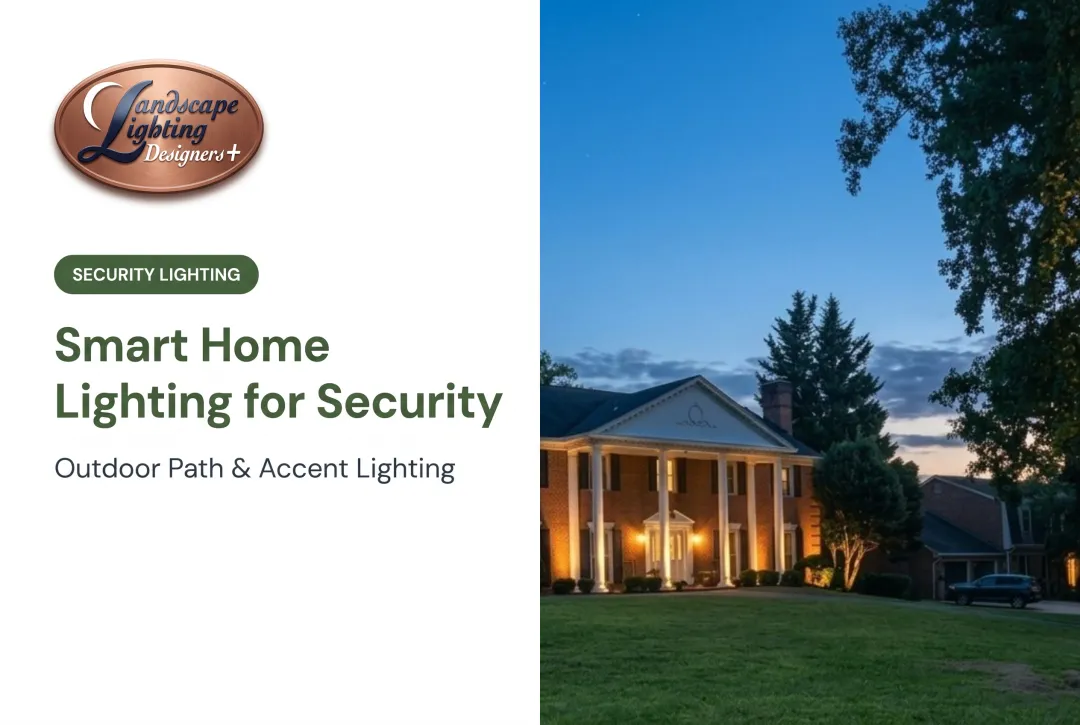
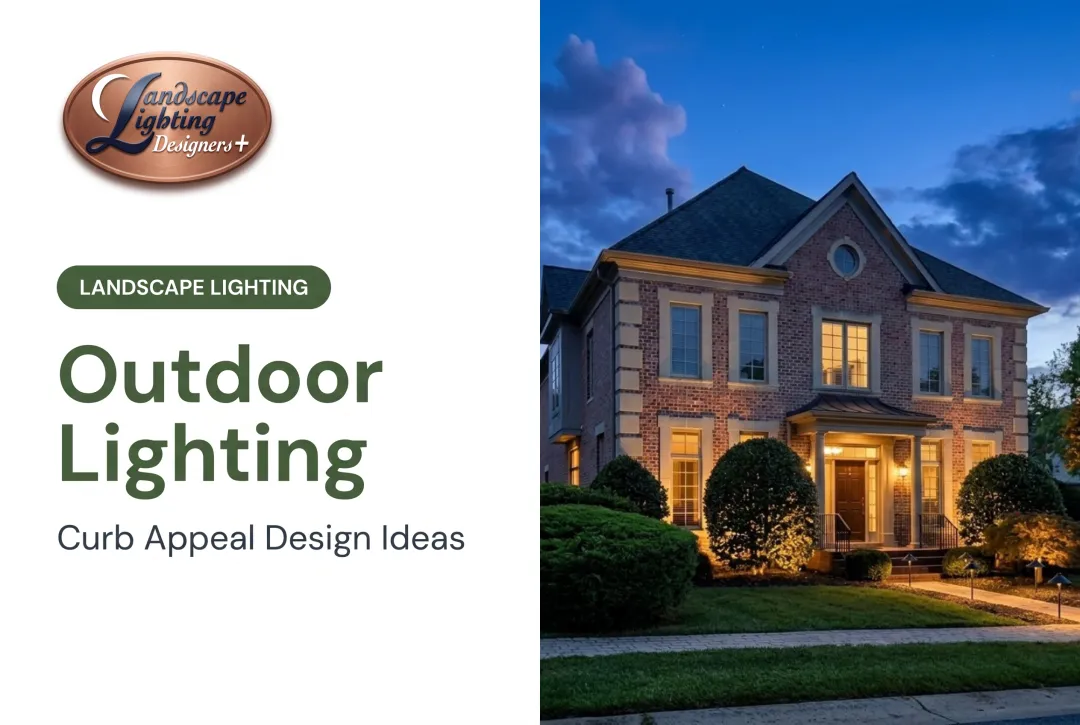
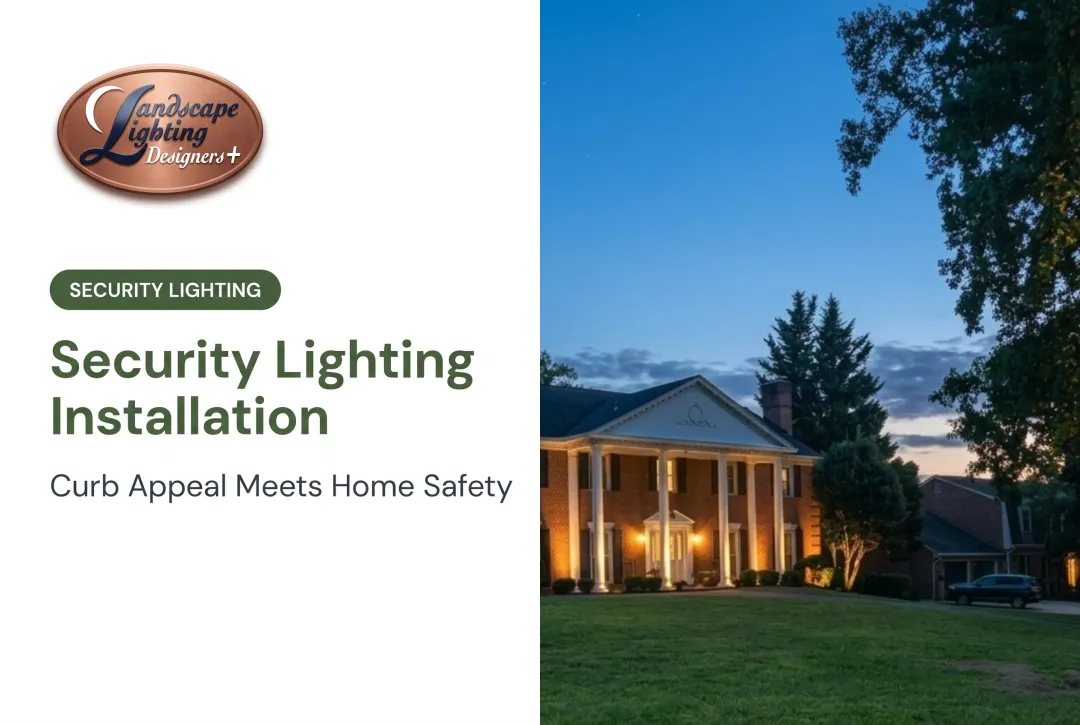
Uplighting trees, architectural features, and landscape elements serves double duty. Highlighting a beautiful oak, brick facade, or stone wall also eliminates shadows. When positioned thoughtfully, accent lighting fills the gaps between functional fixtures and creates visual depth that makes your property feel both elegant and protected.
Craig Collins builds accent lighting into his designs as part of the security layer, not an afterthought. Uplights reveal texture on masonry and bark, downlights from elevated positions cast light over paths and planting beds, and carefully aimed fixtures highlight architectural details while reducing dark corners.
Smart Lighting Systems
Programmable and remotely controlled systems offer scheduling flexibility, dimming control, and integration with home automation platforms. You can create lighting scenes for different occasions, adjust brightness from your phone, or sync outdoor lighting with indoor systems. Smart controls also enable automated responses, such as lights that gradually brighten at sunset or change intensity based on detected motion.
For security applications, smart systems let you simulate occupancy when traveling, adjust schedules seasonally as sunset times change, and receive alerts when motion sensors trigger. Used well, they keep illumination consistent while giving you remote control over when and how the property is lit.
The full scope of our landscape lighting services covers design, installation, and ongoing maintenance.
Strategic Placement: Where to Install Security Lighting
The Four Critical Zones
Entry points come first. All doors (front, back, side, garage), accessible windows, and ground-level openings require coverage. Design guidelines recommend 5 footcandles at building entrances to clearly illuminate faces and activity.
Perimeter lighting defines property boundaries, fence lines, and the transition between your yard and surrounding spaces. This coverage doesn't require floodlight intensity. Consistent, lower-level illumination that eliminates dark approach paths is more effective.
Pathway coverage connects the street to your front door and continues around the home to secondary entries. Every route someone might use—guest, resident, or intruder—should have adequate lighting to prevent concealment.
Vulnerable areas include basement entries common in DC neighborhoods, spaces beneath decks and porches, side yards with gate access, and service areas near HVAC equipment or utility meters. These spots often receive no natural surveillance and require dedicated fixtures.

Avoiding Common Placement Mistakes
Glare is a security liability. A fixture aimed at eye level blinds you when answering the door and makes it impossible to see who's standing in the light. Downward-facing fixtures and careful aiming keep light on the ground and subject, not in your eyes.
Over-lighting helps intruders by illuminating their work. Excessive brightness also fatigues residents and neighbors, leading to systems that get turned off and eliminating security entirely. The goal is adequate visibility with minimal contrast, not stadium-level intensity.
Uneven coverage creates deep shadows between bright pools of light. A burglar can't hide in a well-lit area, but deep shadows beside bright spots offer perfect concealment. Consistent, overlapping coverage works better than isolated bright zones separated by darkness.
The Cross-Lighting Technique
Illumination from multiple angles eliminates shadows that single-source lighting creates. When fixtures cast light from two or three directions, a person standing in the space receives even illumination with minimal shadowing. This principle applies both to entry points and to surveillance-camera coverage.
Security lighting guidance emphasizes positioning lights to illuminate subjects without blinding cameras or observers. The fixture should be on the observer's side of the subject, with beam direction carefully controlled to avoid glare in the viewing path.
Considerations for Urban DC Properties
Narrow lot lines and proximity to neighbors demand precision. Side-yard lighting must illuminate your passage without spilling into adjacent windows. Shared walls eliminate some access points but concentrate traffic at front and rear entries, requiring robust coverage in those zones.
Row houses benefit from front-stoop lighting that defines the entry, pathway fixtures along the short walk to the street, and rear-alley lighting if present.
Basement entries, common in Georgetown and Capitol Hill, need dedicated downward-facing fixtures that illuminate the stairs and landing without creating glare at street level.
Georgetown's historic district and similar preservation areas may restrict fixture styles and mounting methods. Low-profile fixtures, concealed wiring, and placements that don't alter architectural character become essential.
Craig Collins has designed lighting for Federal-style townhomes, Victorian properties, and historic residences throughout the DC metro area, balancing preservation requirements with security needs.
Height and Angle Principles
Path lights typically stand 14–24 inches tall, with spacing determined by fixture output and beam spread. Manufacturers often recommend 10–14 feet between fixtures to avoid overlighting, but photometric data and site conditions should govern final placement.
Entry and accent fixtures mount at heights from 18 inches to several feet, depending on the feature being lit. Downlights may be elevated on trees, eaves, or posts to cast light over a broader area.
Aim downward and outward to illuminate surfaces and subjects, not upward where light escapes into the night sky and creates glare.
Low-Voltage vs. High-Voltage Security Lighting
Understanding the Difference
Low-voltage landscape lighting operates at 12V, stepping down from standard 120V household current through a transformer. High-voltage systems run at full line voltage. NEC Article 411 defines low-voltage lighting as systems operating at 30V or less, requiring an isolating power supply and identified low-voltage components.
At a glance:
- Low-voltage (12V): Transformer-stepped power, minimal shock hazard, landscape-rated fixtures and cable
- High-voltage (120V): Full line voltage, stricter wiring rules, typically wall- or eave-mounted floods
Most jurisdictions don't require a licensed electrician for low-voltage work, though Montgomery County (Bethesda, Chevy Chase, and nearby) requires a low-voltage electrical permit and inspection. Confirm local rules before you start.

Why Low-Voltage Works Better for Landscape Security
Low-voltage fixtures sit in the landscape instead of on the house. Path lights, bed accents, and slim uplights near trunks do the security work at night and stay quiet during the day. Wall-mounted 120V floods cover ground fast, but they often look institutional next to planting and architecture.
Placement is easier to get right:
- Run cable through beds, under mulch, and around hardscape without line-voltage conduit rules
- Aim light on approach paths, entries, and dark corners rather than blasting a whole facade
- Move or add a fixture later in most areas without a full rewire or new electrical permit
Craig Collins of Landscape Lighting Designers Plus works only with low-voltage landscape fixtures, not 120V house-mounted lights. His 12V LED systems keep installations safe and efficient while staying in scale with the property. After 21 years across the DC metro area, that exclusive focus is how he balances nighttime security coverage with how the home looks after dark.
When High-Voltage Might Be Necessary
Very large properties, commercial sites, or runs that stretch far from the power source can favor high-voltage. Higher voltage lowers current for the same wattage, which helps limit voltage drop over long distances.
For typical residential lots, including larger homes in Potomac or Bethesda, a well-planned 12V layout still covers entries, paths, and yard edges without the look, permitting load, or shock risk of line-voltage floods. If your goal is security lighting that reads as part of the landscape, low-voltage is the practical default.
Integrating Security Lighting with Your Landscape Design
The Balance Between Beauty and Function
Effective security lighting shouldn't announce itself. When a system is designed correctly, guests notice a beautiful, welcoming home—not the fixtures creating that impression. Artistic design creates layers of light that guide movement, reveal architecture and landscaping, and eliminate hiding spots without feeling defensive or institutional.
Craig Collins approaches every project as a designer first, treating lighting as an art form guided by balance, subtlety, and elegance. He personally designs each installation with no project managers or sales representatives, giving clients direct access to his expertise. Thoughtful design delivers security and beauty together—neither has to give way to the other.
Coordinating with Surveillance Systems
Even illumination is the most important lighting factor for good nighttime camera images. Match fixture beams to each camera's field of view, and keep these placement rules in mind:
- Too-narrow beams create bright center spots and dark edges
- Too-wide beams waste light and shorten useful viewing distance
- Place light on the observed side of the subject relative to the camera
- Keep bright fixtures out of the camera frame to avoid glare that forces the lens to stop down
Even scene lighting with the fixture itself out of view protects nighttime image quality. A custom design can place fixtures to support clear video capture without visible glare.

Working with a Landscape Lighting Designer
A trained designer understands fixture optics, aiming techniques, control strategies, and how light interacts with architecture and landscaping. You get coverage where you need it, beauty throughout, and none of the trial-and-error waste that comes with DIY approaches.
At Landscape Lighting Designers Plus, Craig Collins brings 21 years of specialized experience to homes across Bethesda, Potomac, Chevy Chase, Rockville, and neighborhoods throughout Washington DC. A complimentary consultation starts with your property, goals, and concerns—then a custom low-voltage plan balances security, aesthetics, and budget.
Photographs settle this faster than descriptions—our lighting project gallery shows how these effects look after dark on finished homes.
Frequently Asked Questions
What are the four types of security lighting?
The four standard types are continuous, standby, movable/portable, and emergency. Continuous lighting stays on through the night; standby (often motion-activated) turns on when activity is detected; movable lighting uses portable fixtures; emergency lighting runs on backup power if normal power fails.
What is the best security light for a home?
For most homes, low-voltage LED fixtures with motion activation in targeted zones offer the best mix of efficiency, coverage, and clean looks. A complete system usually pairs continuous pathway and entry lighting with motion-activated zones in side yards and service areas.
How bright should security lighting be?
Brighter isn't better: even coverage beats intense light with dark gaps. Design benchmarks suggest about 0.4 footcandles for residential sidewalks and 5 at building entrances (design references, not code). Placement, even distribution, and low glare matter more than raw intensity; over-lighting can help intruders see their work.
Does security lighting really deter crime?
Yes, in public spaces: a New York City streetlight study found at least a 36% drop in nighttime outdoor index crimes, and broader reviews reported about a 14% overall decrease. Those studies cover street lighting, not residential low-voltage systems specifically. At home, lighting works best with locks, alarms, and cameras.
Can security lighting be attractive and not look institutional?
Yes. Low-voltage landscape lighting can deliver security without a harsh, institutional look when fixtures sit in the landscape, aim to limit glare, and use warm color temperatures (2700K–3000K) in layered layers. At Landscape Lighting Designers Plus, Craig Collins designs systems where coverage and curb appeal come from the same plan.
How much does professional security lighting installation cost in the DC metro area?
Costs depend on property size, fixture quality, system complexity, and site conditions (a Georgetown row house needs far fewer fixtures than a large Potomac estate). For accurate pricing, Landscape Lighting Designers Plus offers complimentary consultations across the DC metro area: call (888) 582-8845 or email contact@landscapelightingnow.com.